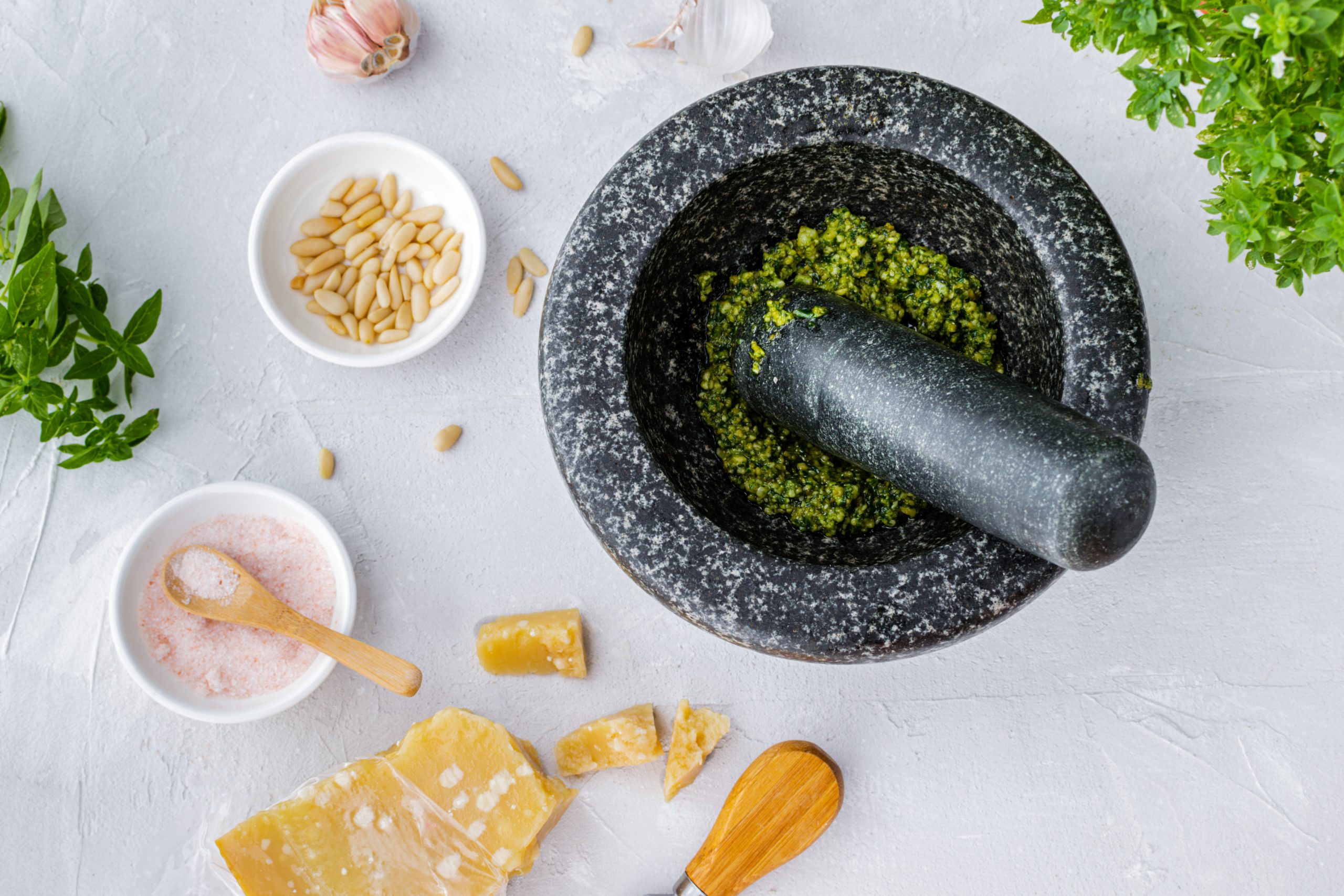
The short version: real pesto – pesto alla genovese – is from Genoa and Liguria, and it is never blended. It is Genovese basil, pine nuts, garlic, two cheeses and Ligurian olive oil ground by hand in a marble mortar, tossed through trofie or trenette. “Pesto” just means “pounded,” so the method is the whole point. Below is what goes in it and how to do it right.
At a glance
| Ingredient | Detail |
|---|---|
| Basil | Genovese DOP – small, sweet leaves (best from Prà) |
| Pine nuts | Mediterranean, lightly used |
| Garlic | A little, sweet Vessalico garlic ideally |
| Cheese | Parmigiano + Pecorino (Fiore Sardo) |
| Oil & salt | Ligurian extra-virgin olive oil; coarse salt |
| Method | Ground in a marble mortar, never a blender |
What real pesto is
The word pesto comes from pestare, “to pound,” and that is the definition: a sauce made by grinding, not blending. The classic pesto alla genovese uses small-leaved Genovese DOP basil – the finest grown in Prà, west of Genoa – with pine nuts, a little sweet garlic, Parmigiano and Pecorino, Ligurian extra-virgin olive oil and coarse salt. There is nothing else in it: no cream, no lemon, no nuts other than pine.
Why the mortar matters
Pesto is ground slowly in a marble mortar with a wooden pestle, and the order matters – garlic and salt first, then the pine nuts, then the basil bruised against the sides, then the cheeses, and finally the oil worked in. Grinding (rather than a metal blade spinning fast) keeps the basil from heating and oxidising, which is why hand-made pesto stays bright green and tastes fresher. Learning that technique is exactly what a Ligurian cooking class is for.
How to eat it
Traditionally pesto dresses trofie or trenette pasta – and the truly authentic version adds sliced potato and green beans boiled with the pasta, so everything is coated together. It also goes into minestrone and Ligurian lasagne. Toss it through hot (not boiling) pasta off the heat, loosened with a spoon of the cooking water, and never cook the sauce itself.
Frequently asked questions
What is the difference between pesto and pesto alla genovese?
“Pesto” just means a pounded sauce; pesto alla genovese is the specific Ligurian original – basil, pine nuts, garlic, Parmigiano and Pecorino, and olive oil, ground in a mortar.
Why grind pesto in a mortar instead of a blender?
Grinding bruises the basil without heating it, so the sauce keeps its colour and fresh aroma; a fast metal blade warms and oxidises it.
What pasta goes with pesto?
Trofie or trenette, classically boiled with a little potato and green bean. Learn it on a Cinque Terre cooking class.
Where to learn pesto
Grind it in the mortar on a Cinque Terre cooking class, taste it on a Genoa food tour, or explore the region from the Cinque Terre & Liguria hub.