What to Eat in Madrid: Local Dishes, Where Locals Eat & the Best Tapas Tours
The short version: in Madrid, eat cocido madrileño at lunch, a bocadillo de calamares near the Plaza Mayor, huevos rotos in La Latina and churros con chocolate at any hour. For cocido, book Malacatín or Taberna La Bola; for huevos rotos, Casa Lucio on Cava Baja; for fried salt cod and a beer, queue at Casa Labra by the Puerta del Sol. Drink vermut from the tap, a sherry at La Venencia and a glass of Vinos de Madrid. And if you only have a night or two, a guided tapas tour gets you to the right bars in three hours. Below: what to eat, exactly where to eat it, what to drink, and the food experiences worth booking.
Book a Madrid tapas tour
Short on time? Let a local walk you to the right places.
Our top pick is the Food and Wine Tour with 10 Tapas and 4 Drinks: 3 hours, rated 4.9 from 1,308 reviews on GetYourGuide.
What to eat in Madrid, and where to eat it
| Dish | What it is | Where to eat it in Madrid |
|---|---|---|
| Cocido madrileño | Chickpea and meat stew served in three courses (vuelcos): the broth with noodles, then chickpeas and vegetables, then the meats | Malacatín; Taberna La Bola; Lhardy |
| Bocadillo de calamares | Fried squid rings in a crusty white roll, Madrid’s classic cheap lunch | La Campana; El Brillante |
| Huevos rotos | Fried eggs broken over chips, often with ham or chorizo | Casa Lucio |
| Tajada de bacalao | A battered, fried piece of salt cod, eaten standing with a beer | Casa Labra |
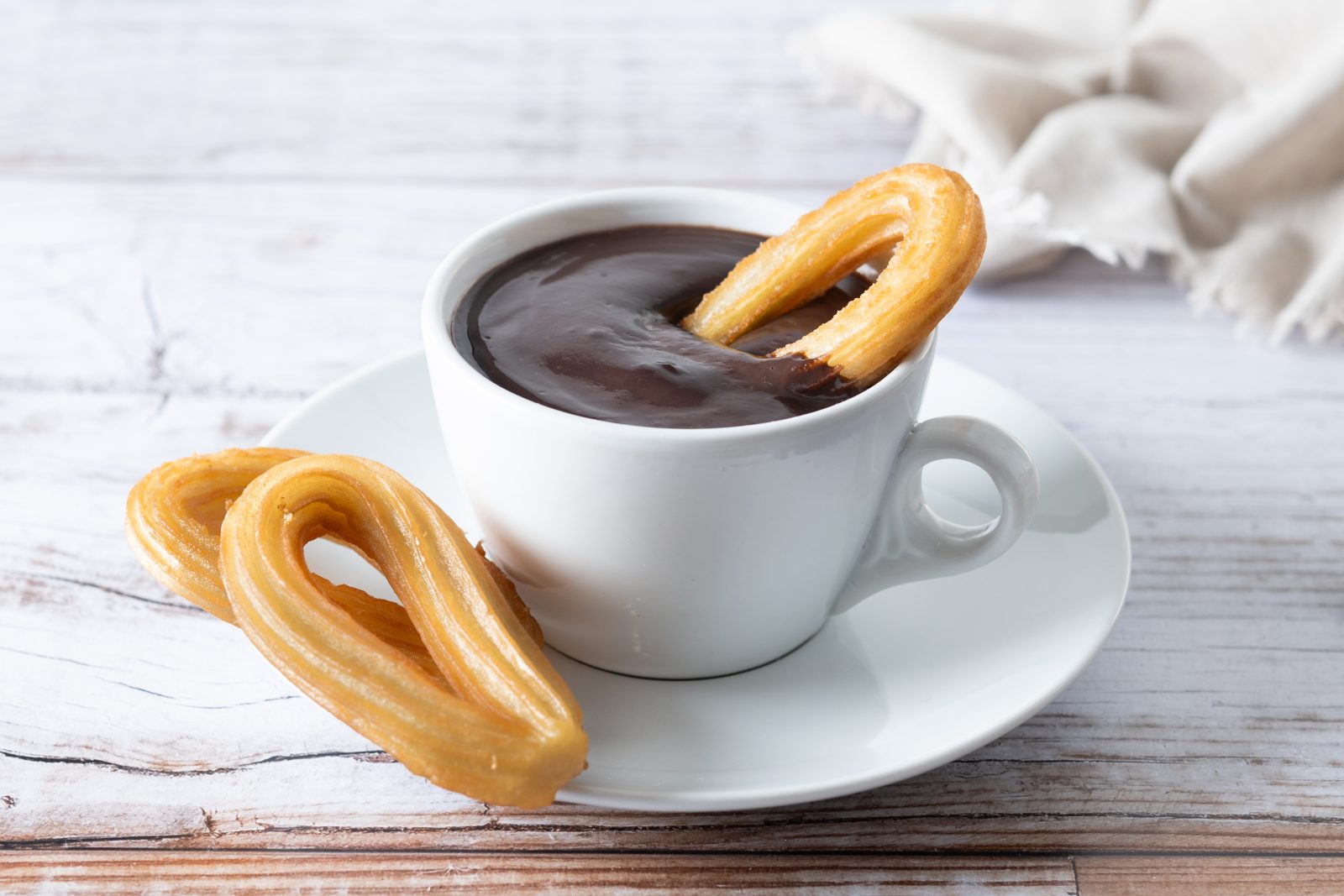
| Churros con chocolate | Fried dough sticks (or thicker porras) dipped in thick hot chocolate | Chocolatería San Ginés; Los Artesanos 1902; Chocolat |
| Tortilla de patatas | Spanish potato omelette, served by the slice in bars | Bodega de la Ardosa; Las Tortillas de Gabino |
| Callos a la madrileña | Tripe stewed with chorizo, black pudding and paprika | Casa Alberto; Taberna Antonio Sánchez |
| Rabo de toro | Oxtail slow-braised in red wine | Casa Alberto |
| Vermut de grifo | Sweet red vermouth from the tap, the Sunday aperitivo | Casa Alberto; Bodega de la Ardosa |
Where to eat in Madrid
Madrid eats late and eats in the bar. Lunch is the main meal, from about 14:00, and that is when cocido is served; dinner starts at 21:00. The best plan is to pick a neighbourhood, stand at the counter of two or three old tabernas with a caña (a small draught beer) or a vermut, and order a tapa in each. These are the areas worth your evenings.
Sol, Plaza Mayor and the Austrias
The centre is busy and touristy, but some of the city’s oldest food addresses are here. Casa Labra, on Calle Tetuán beside the Puerta del Sol, has been frying salt cod since 1860: queue at the counter for a tajada de bacalao and a cod croqueta with a caña, which costs very little. Cash is preferred. Just off the Plaza Mayor, La Campana is the bar many guides name first for a bocadillo de calamares; expect a queue at lunch. For cocido, Taberna La Bola near the Teatro Real has cooked it in individual clay pots over oak charcoal since 1870, with a gluten-free version; it is popular with visitors, so book, especially at weekends. Lhardy, on Carrera de San Jerónimo since 1839, is the elegant, expensive way to eat cocido, served in three courses.
For a modern dinner near the Royal Palace, Desborre is listed in the Michelin Guide (Michelin listing): chef Lucía Grávalos cooks seasonal, vegetable-led dishes from organic produce, à la carte or as a tasting menu. And after midnight, or before breakfast, do as Madrid does at Chocolatería San Ginés, the churrería in its own passage off Calle Arenal, frying since 1894. Los Artesanos 1902 nearby is the calmer alternative, with both milk and dark chocolate and a gluten-free menu.
La Latina and Cava Baja
La Latina is the classic tapas crawl, best on Sunday after the Rastro flea market, when Cava Baja and the streets around it fill from midday. Casa Lucio (Cava Baja 35) has served its famous huevos estrellados, fried eggs broken over chips, since 1974; book ahead for the dining room. Two streets away, Malacatín on Calle de la Ruda is a tiny tiled tavern from 1895 and the neighbourhood’s cocido address, around 25 euros for the full three courses; cocido is a cold-weather dish here, served from September to May.
On the quieter parallel street, Cava Alta, two small restaurants are in the Michelin Guide. Trèsde holds a Bib Gourmand (Michelin listing) for its bistro-style market cooking, with a pairing of sherry, sake and natural wine. Marmitón is a rustic room run by two chefs, cooking classic dishes with strong flavours (Michelin listing).
Huertas and the Barrio de las Letras
The literary quarter between Sol and the Prado is where to drink and eat old Madrid. Casa Alberto (Calle de las Huertas 18) has stood behind its red façade and zinc bar since 1827; order the house vermut from the tap, callos and rabo de toro. La Venencia on Calle Echegaray pours only sherry, with simple tapas such as cheese and chorizo; your bill is chalked on the bar, photos are not allowed and tipping is not expected. Bring cash.
For dinner, Triciclo on Calle Santa María is listed in the Michelin Guide (Michelin listing) for relaxed, seasonal dishes built on very good produce, and Casa Mortero, behind the Congreso, is also listed (Michelin listing) for traditional cooking with a creative touch. For churros away from the crowds, Chocolat is the Huertas favourite with locals.
Malasaña and around Gran Vía
Malasaña is young and busy at night, but its old bars are among the best in the city. Bodega de la Ardosa (Calle Colón 13) has been pouring since 1892: order the tortilla de patatas, the croquetas and a vermut, and arrive early at weekends, when it is standing room only. Café Comercial, the grand café on the Glorieta de Bilbao, serves a classic bocadillo de calamares.
For a proper dinner, La Tasquita de Enfrente on Calle Ballesta, just behind Gran Vía, is listed in the Michelin Guide (Michelin listing) for refined market cooking, at the upper end of the price range. Angelita, on Calle de la Reina, is the address for wine lovers: around 2,000 wines by the bottle, more than 50 by the glass, and modern tapas from produce grown in their own garden in Zamora (Michelin listing). The bar and high tables are first come, first served; it opens Monday to Friday, late afternoon and evening.
Lavapiés and Atocha
Lavapiés is the most mixed and least polished of the central barrios, and its food mirrors that. Taberna Antonio Sánchez (Calle Mesón de Paredes 13), dating from 1787, is often called the oldest tasca in Madrid: order oreja (pig’s ear), callos or the cocido, with wine by the glass, and look for its menú del día at lunch. Down by the station, El Brillante is the other classic for a bocadillo de calamares, a good stop after the Reina Sofía museum. Ten minutes east, Bodegas Rosell (Calle General Lacy 14), behind a tiled façade from 1920, lists more than 200 wines with a focus on the Madrid region, with croquetas and bacalao to go with them.
Chamberí
Chamberí is residential, smart and very Madrileño, with few visitors and some of the best-value cooking in the city. Las Tortillas de Gabino (Calle Rafael Calvo 20) holds a Bib Gourmand (Michelin listing) for its omelettes: order the Velazqueña, the classic potato tortilla, or the truffled one. Sisapo on Calle Trafalgar, also a Bib Gourmand (Michelin listing), cooks bold, personal dishes with Asian and South American touches, such as steak tartare with grilled bone marrow. Fismuler on Calle Sagasta, listed in the Michelin Guide (Michelin listing), serves updated traditional food in a stripped-back room.
For tapas, walk Calle de Ponzano, the street locals use for an evening of bars. Neotaberna Miguelín (Calle Santa Engracia 57) pours cañas from tank beer with bravas, torreznos (crisp pork belly) and callos with chickpeas.
Quick picks
- Classic dinner: Casa Lucio for huevos rotos; Casa Alberto for rabo de toro.
- Cheap and fast: a bocadillo de calamares at La Campana or El Brillante; a tajada de bacalao at Casa Labra.
- Special night: La Tasquita de Enfrente, or the wine list at Angelita.
- Best for cocido: Malacatín for the neighbourhood version, Taberna La Bola for the clay pot, Lhardy for the grand version. Lunch only.
- Best value with a Michelin listing: Trèsde in La Latina, Las Tortillas de Gabino in Chamberí.
Names link to Google Maps for directions. We checked these places in October 2026. Opening days change, especially out of season, so check before you go.
The markets
Mercado de San Miguel, the iron-and-glass market steps from the Plaza Mayor, is now a place for gourmet tapas and local specialities rather than shopping; it gets very crowded, so go early. For a market Madrileños actually use, head to Mercado de Antón Martín (Calle Santa Isabel 5), between Huertas and Lavapiés: fresh produce, meat and cheese downstairs, with small bars and food stalls between them. Mercado de San Fernando in Lavapiés is the relaxed, alternative one, with Spanish and international stalls and, unusually, books sold by weight. In Chamberí, Mercado de Vallehermoso mixes traditional stalls with places serving gildas (anchovy, olive and chilli skewers), torreznos and Japanese and Italian food. For top-quality produce, Mercado de la Paz in the Salamanca district has traded since 1882.
What to drink in Madrid
Madrid’s own drink is vermut: sweet red vermouth from the tap, served with ice, a slice of orange and an olive, before Sunday lunch. Casa Alberto and Bodega de la Ardosa are the classic places to order it. The everyday beer is a caña of Mahou, the local brewery. For wine, ask for Vinos de Madrid, the region’s own appellation: Garnacha reds from the granite hills of the Sierra de Gredos to the west, and whites from the Malvar and Albillo grapes. Bodegas Rosell has one of the best lists of them. For sherry, La Venencia pours manzanilla, fino, amontillado and oloroso straight from the barrel, and for a long list of Spanish wines by the glass, Angelita is the serious choice.
Food experiences to book in Madrid
Madrid’s best food is spread over dozens of small bars, each famous for one or two things, and the hard part on a short visit is knowing what to order where. A tapas tour solves that: a local guide takes you through La Latina, Huertas or the centre in three to four hours, orders the right dish in each bar and explains the customs. A cooking class is the way to learn tortilla, croquetas or paella to take home. These are the best-rated options on GetYourGuide.
| Experience | Length | Rating (reviews) | Best for | Book |
|---|---|---|---|---|
| Food and Wine Tour with 10 Tapas and 4 Drinks | 3 hours | 4.9 (1,308) | A first visit | Check availability |
| Guided Food Tour with Tapas and Spanish Wine | 2.5 hours | 4.9 (898) | Tapas and wine | Check availability |
| Ultimate Food Tour of Local Markets and Tapas | 3 hours | 4.8 (229) | Markets | Check availability |
| Tapas, Taverns and History Tour | 3.5 hours | 4.9 (112) | Old taverns | Check availability |
Our pick: the Food and Wine Tour with 10 Tapas and 4 Drinks, rated 4.9 (1,308) on GetYourGuide.
Ratings as shown on GetYourGuide in October 2026. Check the listing for live prices and availability.
Frequently asked questions
What is the one dish to eat in Madrid?
Cocido madrileño, the chickpea and meat stew served in three courses, at lunch. Malacatín in La Latina and Taberna La Bola near the Teatro Real are the places to try it; book ahead.
Where do locals eat in Madrid?
In old tabernas and neighbourhood bars rather than on the Plaza Mayor: Casa Alberto and La Venencia in Huertas, Bodega de la Ardosa in Malasaña, Taberna Antonio Sánchez in Lavapiés, and the bars of Calle de Ponzano and the restaurants of Chamberí, such as Las Tortillas de Gabino.
Where can I eat cheaply in Madrid?
A bocadillo de calamares at La Campana or El Brillante, a tajada de bacalao and a caña at Casa Labra, and the menú del día, the set lunch many tabernas serve on weekdays. Churros con chocolate at San Ginés is an inexpensive breakfast or late-night snack.
What time do people eat in Madrid?
Lunch runs from about 14:00 to 16:00 and dinner from 21:00, often later at weekends. Cocido is a lunch dish. Many restaurants close between lunch and dinner, but bars serve tapas through the evening.
Do I need to book restaurants in Madrid?
For sit-down meals, yes: Casa Lucio, Taberna La Bola, Lhardy and the Michelin-listed restaurants should be booked, especially at weekends. Tapas bars such as Casa Labra, La Venencia and Bodega de la Ardosa work on a first-come basis at the counter, so go early.
Is a Madrid tapas tour worth it?
Yes, if you have a day or two: in one evening you learn how to order, taste the classics in the right bars and pick up where to eat for the rest of your stay. Compare them above or on our Madrid tapas tours page.
Plan your Madrid food trip
Madrid tapas tours · Madrid cooking classes · Food experiences in Madrid · Best Madrid tapas tours, compared · Madrid cooking classes guide