7 Days in Andalusia for Food and Wine: A Suggested Itinerary
The short version: a week is the right amount of time to eat across Andalusia without rushing. Give Seville three nights and use it as a base for tapas, a cooking class, flamenco and day trips to the sherry bodegas of Jerez and the patios of Córdoba. Then take two nights in Granada for its free tapas and the Albaicín, and two in Málaga for the market, sardines grilled on the beach and sweet Málaga wine. Below is a loose shape for the trip with the experiences worth booking.
A note on how to use this: these are suggestions and options, not a day-by-day timetable. Tours, tastings, cellar visits and cooking classes usually need booking, and market days, opening hours, train and bus timetables and prices change through the year, so treat the days as a flexible outline and confirm anything time-sensitive directly with the operator or venue before you travel.
At a glance
| Day | The idea | Worth booking |
|---|---|---|
| Day 1 | Seville: tapas through the centre and Triana | A Seville tapas tour |
| Day 2 | Seville: market, cooking and an evening of flamenco | A cooking class, a flamenco show |
| Day 3 | Day trip to Jerez for sherry | A sherry bodega tour |
| Day 4 | Day trip to Córdoba, or travel on to Granada via Córdoba | A Córdoba tapas tour |
| Day 5 | Granada: free tapas, the Albaicín and Sacromonte | A Granada tapas tour, flamenco |
| Days 6-7 | Málaga: the market, espetos and sweet wine | A food tour, a wine tasting, a cooking class |
| Best base | Seville (3 nights), Granada (2), Málaga (2) | |
| Getting around | Fast trains and buses link the cities; no car needed |
Days one and two: Seville
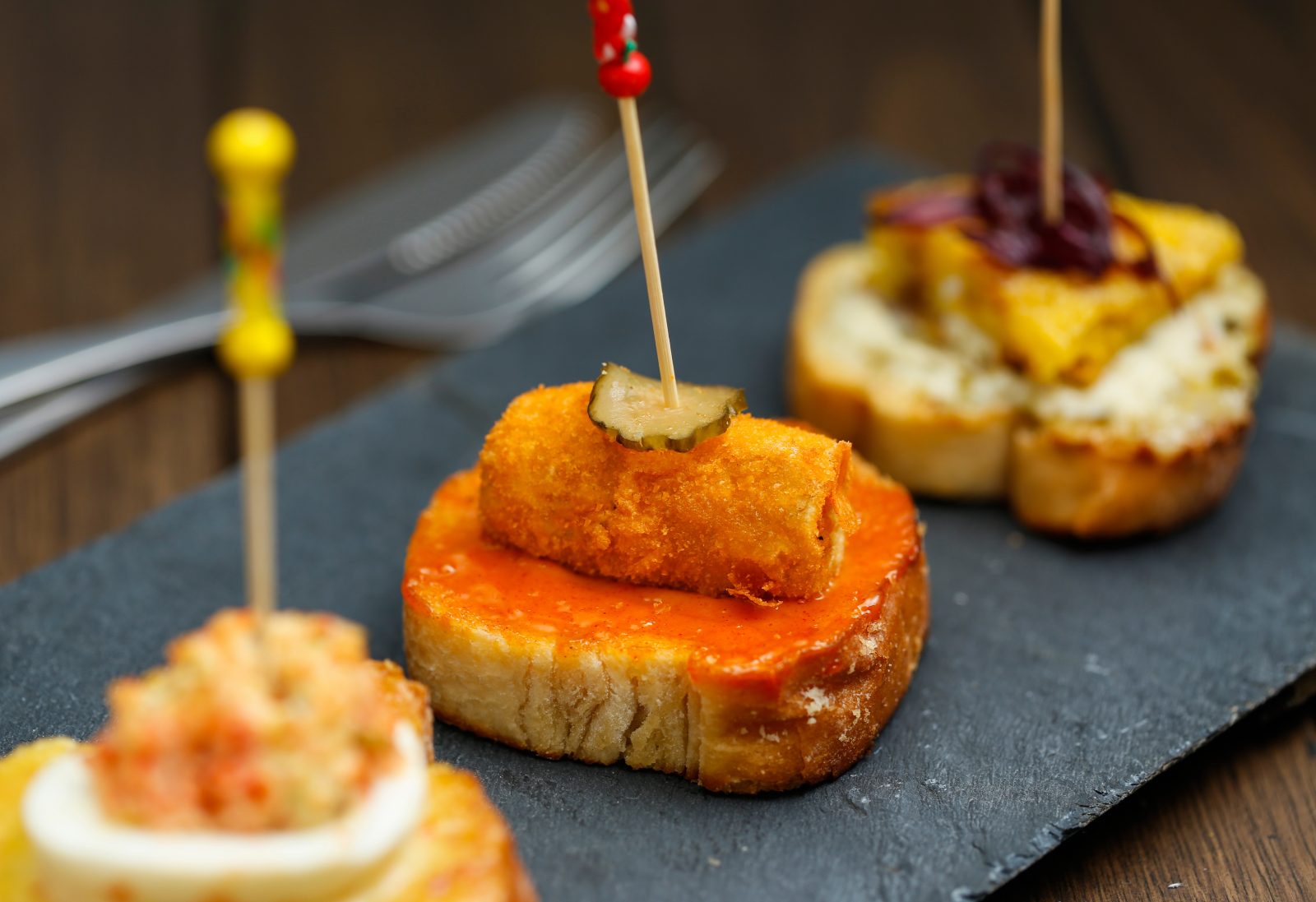
Seville is the capital of the tapas crawl. Spend the first evening hopping between bars in the centre and across the river in Triana: jamón ibérico, espinacas con garbanzos (spinach with chickpeas and cumin), pringá sandwiches, fried fish, slow-cooked carrillada (pork cheeks) and a glass of chilled fino or manzanilla. A Seville tapas tour on the first night teaches you how ordering works, which makes every meal afterwards easier. On day two, visit the Mercado de Triana, then cook gazpacho, salmorejo or paella at one of the Seville cooking classes, many of which start with a market walk. Finish with flamenco, the art form most closely tied to the city: the Seville flamenco shows range from small intimate venues to dinner-and-show evenings. Our what to eat in Seville guide lists the dishes.
Day three: Jerez and sherry
Jerez de la Frontera is about an hour from Seville by train and is the heart of the sherry triangle. The big bodegas run tours of their cool, cathedral-like cellars, where the wine ages in the solera system, followed by tastings that run from bone-dry fino to nutty amontillado and oloroso and the sticky-sweet Pedro Ximénez. Pick one of the Jerez sherry tours, ideally with tapas pairings, and read sherry explained first so the styles make sense. Jerez is also a cradle of flamenco and has some of the best traditional bars for it.
Day four: Córdoba
Córdoba is under an hour from Seville by high-speed train and has direct trains on to Granada and Málaga, so you can visit as a day trip or break the journey there. Beyond the great Mezquita, this is the home of salmorejo, the thick, cold tomato cream topped with egg and jamón, and of flamenquín, rolled pork and ham fried in breadcrumbs. Taste them with a glass of the local Montilla-Moriles wine on a Córdoba tapas tour, and see what to eat in Córdoba for more. In May the city’s flower-filled patios open for a festival, a beautiful time to go.
Day five: Granada
Granada is famous for something rare in Spain today: in many bars you still get a free tapa with every drink, and the plate often gets bigger with each round. Spend the evening drifting between bars in the centre and climbing into the Albaicín, the old Moorish quarter, for views of the Alhambra at sunset. A Granada tapas tour takes you to the places locals rate, and our what to eat in Granada guide covers dishes like habas con jamón and piononos, the little syrup-soaked cakes from nearby Santa Fe. After dinner, see flamenco in the cave venues of Sacromonte; browse the Granada flamenco shows. Book Alhambra tickets well ahead. See also the Granada hub.
Days six and seven: Málaga
End on the coast. Start at the Mercado de Atarazanas, Málaga’s iron-and-glass market, for fried fish, olives and local cheeses, then head to the beach bars of Pedregalejo for espetos, sardines skewered and grilled over an open fire in an old boat. Málaga is also known for its sweet wines made from Moscatel and Pedro Ximénez grapes, best tasted in an old bodega bar or on one of the Málaga wine tours. Use the second day for a Málaga food tour or a hands-on Málaga cooking class. Our what to eat in Málaga guide lists the essentials, and the Málaga hub has everything in one place.
Where to base yourself, and how to travel it
You don’t need a car. A neat structure is three nights in Seville (with Jerez and Córdoba as day trips), two in Granada and two in Málaga, which has a big international airport for the flight home. Fast trains link Seville with Córdoba and Málaga, and trains and buses connect Granada with both; check current timetables when you plan. Andalusia is very hot in July and August, so spring (March to June) and autumn (September to November) are the best seasons for walking between tapas bars. Spanish meal times run late: lunch around 2pm, dinner after 9pm. For more ideas, see the best tapas and pintxos tours in Spain and the Seville hub.
Frequently asked questions
How many days do you need in Andalusia for a food trip?
A week covers the highlights: three nights in Seville with day trips to Jerez and Córdoba, two in Granada and two in Málaga. With five days, focus on Seville, Jerez and either Granada or Málaga.
Which Andalusian city is best for tapas?
Seville has the classic tapas culture and the widest choice of bars; Granada is famous for its free tapa with each drink; Málaga is best for seafood and sweet wine. Each is worth a tapas tour.
Is it worth visiting Jerez for sherry?
Yes, if you like wine. Jerez is about an hour from Seville by train, and a bodega tour shows you the solera ageing system and lets you taste the full range from dry fino to sweet Pedro Ximénez.
When is the best time to visit Andalusia for food?
Spring and autumn. Summer is extremely hot, which makes long evenings of bar hopping hard work. Spring brings Seville’s Feria and Córdoba’s patio festival; autumn brings the grape harvest.
Plan your Andalusia food trip
Book a Seville tapas tour, a sherry tour in Jerez, a Granada tapas tour or a Málaga food tour, or see everything on the Spain food and wine hub.
Recommended experiences to book
More guides
- Valencia Paella Cooking Classes: Make the Real Thing
- The Best Wine Tours in Spain: Rioja, Sherry, Cava & More
- What to Eat in Seville: Local Dishes, Where Locals Eat & the Best Tapas Tours
- The Best Food Tours in Europe: 20 Cities Worth Eating Through
- San Sebastian Pintxos Tours: What to Eat & How to Book