The short version: the best European Christmas markets for food and wine are Vienna, Budapest and Prague in Central Europe, plus Strasbourg, Nuremberg and Cologne further west. You go for the mulled wine (Gluhwein, forralt bor, svarak), the sweet spiral chimney cakes, roasted chestnuts, grilled sausages and gingerbread, all eaten outdoors with a hot cup in your hands from late November to Christmas. Here is where to go and what to eat and drink.
At a glance
| Market city | Drink to order | Eat this |
|---|---|---|
| Vienna | Gluhwein & fruit Punsch | Roasted chestnuts, Kartoffelpuffer, Kaiserschmarrn |
| Budapest | Forralt bor (mulled wine) | Kurtoskalacs chimney cake, langos, kolbasz |
| Prague | Svarak & medovina (mead) | Trdelnik, klobasa sausage, bramborak |
| Strasbourg | Vin chaud | Bredele biscuits, tarte flambee |
| Nuremberg | Gluhwein | Nurnberger sausages, Lebkuchen gingerbread |
Vienna: the grand one
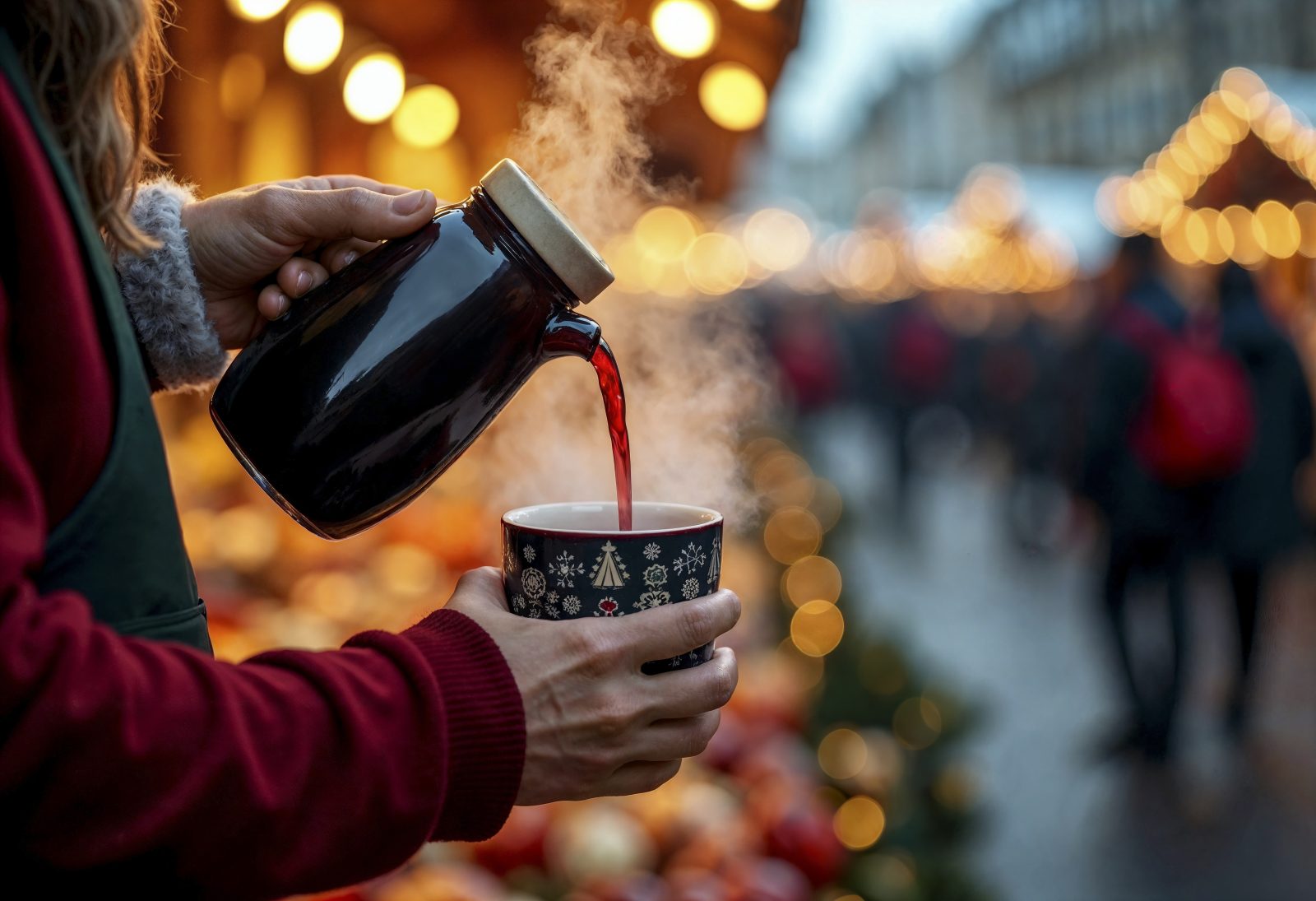
Vienna turns Christmas into theatre. The big market on Rathausplatz in front of the City Hall is the postcard one, but food lovers prefer the smaller, prettier Spittelberg and the market at Schonbrunn Palace. Warm up with Gluhwein or a fruity Punsch in a collectible mug, snack on Maroni (roasted chestnuts) and Kartoffelpuffer (potato fritters), and finish with Kaiserschmarrn. Full rundown in our Vienna Christmas markets food guide.
Budapest: the best value
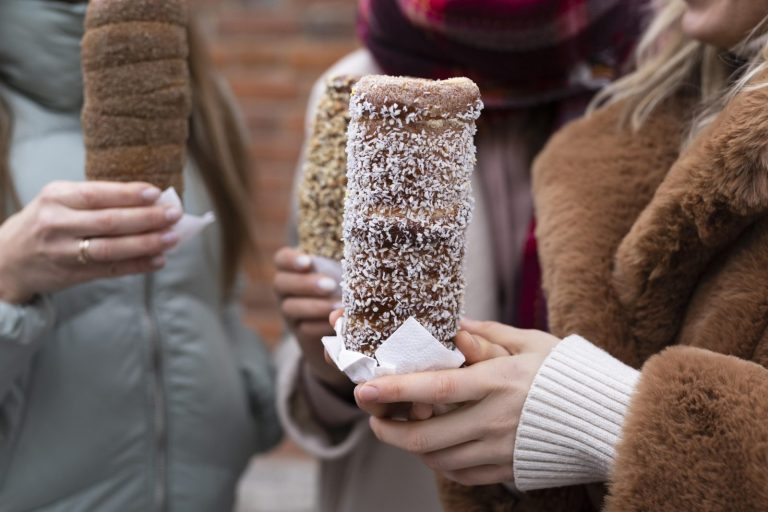
Budapest’s Vorosmarty ter and St. Stephen’s Basilica markets are cheaper than their western cousins and seriously good for eating. The star is kurtoskalacs, the spit-roasted chimney cake rolled in sugar and cinnamon, alongside langos, grilled kolbasz sausage and bowls of goulash, all washed down with forralt bor. See our Budapest Christmas markets food guide.
Prague: the fairytale one
Prague’s Old Town Square market, under the astronomical clock and a giant tree, is pure fairytale. Drink svarak (Czech mulled wine) or warming medovina honey mead, eat a trdelnik, a grilled klobasa in a roll, or a bramborak potato pancake. More in our Prague Christmas markets food guide.
And the western classics
Strasbourg in Alsace calls itself the Capital of Christmas, with vin chaud, Alsatian tarte flambee and boxes of little bredele biscuits. Nuremberg‘s Christkindlesmarkt is famous for its finger-sized Nurnberger sausages and soft Lebkuchen gingerbread, and Cologne rings its cathedral with several markets and plenty of Gluhwein.
When to go
Most European Christmas markets run from mid-to-late November until 23 or 24 December, though some (Vienna, Budapest) stretch to New Year or early January. Weekday afternoons and early evenings are calmest; weekends are magical but packed. Dress warm, bring cash for the small stalls, and keep the deposit mug as a souvenir.
Frequently asked questions
Which European Christmas market is best for food?
For food and value, Budapest and Vienna are hard to beat (chimney cake, sausages, mulled wine), Prague is the most atmospheric, and Nuremberg and Strasbourg are the western classics for gingerbread and vin chaud.
When do Christmas markets open?
Usually from mid-to-late November to 23 or 24 December, with Vienna and Budapest often running into early January.
What do you drink at a Christmas market?
Mulled wine above all: Gluhwein in Austria and Germany, forralt bor in Hungary, svarak in Czechia, vin chaud in France, plus fruit punch and honey mead.
Book a Christmas market food tour
See our city guides for Vienna, Budapest and Prague, or browse Austria and Hungary food experiences.