White Truffle vs Black Truffle, Explained
White truffle vs black truffle explained: Tuber magnatum (autumn, raw, expensive, from Alba and Istria) vs black melanosporum and aestivum (cooked, cheaper, year-round).
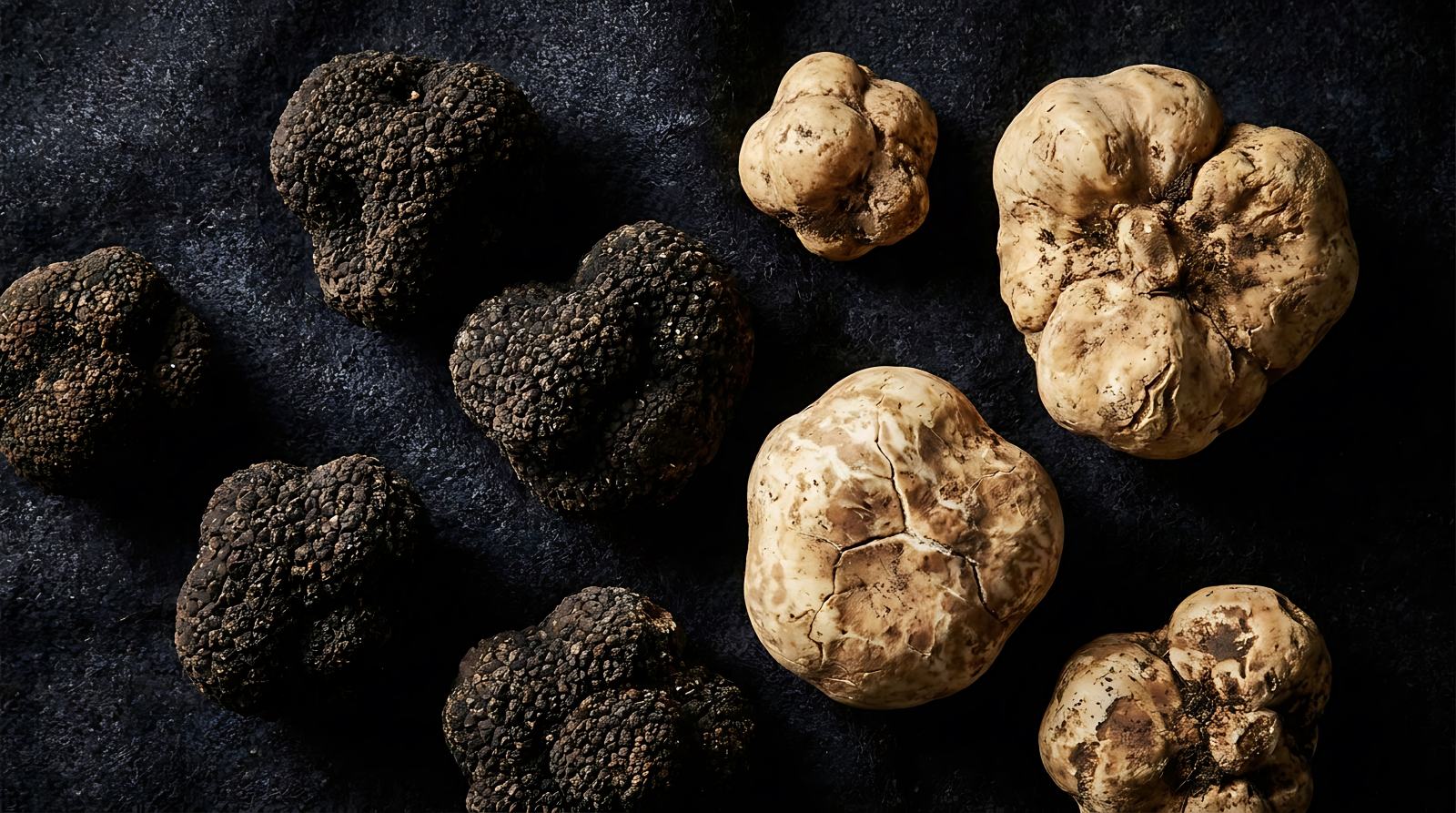
The short version: white truffles (Tuber magnatum) are the rare, autumn-only, intensely aromatic ones from Alba and Istria that you shave raw over food and pay a fortune for; black truffles (Tuber melanosporum in winter, aestivum in summer) are more affordable, found much of the year, and are usually cooked. White is the diva, black is the workhorse.
Hunt truffles in Piedmont
Want to join a truffle hunt near Alba?
Our top pick is the Truffle Hunting Tour Led by a Hunter and His Dog: a truffle hunt in the Langhe hills near Alba (1.5 to 3.5 hours), rated 4.8 from 250 reviews on GetYourGuide.
At a glance
| White truffle | Black truffle | |
|---|---|---|
| Species | Tuber magnatum | Tuber melanosporum (winter) / aestivum (summer) |
| Season | Roughly October to December | Winter (prized) or summer (milder), much of the year |
| Famous for | Alba (Piedmont), Istria | Perigord (France), Umbria, Istria |
| How to use | Shaved raw, off the heat | Usually cooked, infused into dishes |
| Price | Very high | Much lower |
The white truffle: the expensive one
The white truffle (Tuber magnatum, the “tartufo bianco”) is the one that makes headlines and sells at auction for thousands. It cannot be cultivated, grows only in a few places (above all the Langhe around Alba and inland Istria), and appears for just a few autumn months. Its aroma is pungent and garlicky-sweet, and heat destroys it, so it is always shaved raw at the table over simple things: tajarin pasta, eggs, risotto, cheese. Little goes a long way.
The black truffle: the everyday one
The black truffle comes in two main kinds. The winter black (Tuber melanosporum, the Perigord truffle) is deeply aromatic and prized, if nowhere near white-truffle prices; the summer black (Tuber aestivum, “scorzone”) is milder and cheaper. Unlike white, black truffle stands up to heat and is usually cooked, infused into sauces, butters, pasta and meat, which is why you see it year-round on menus and in products.
How to tell them apart on a menu
If a dish is being shaved tableside in autumn and the price makes you blink, it is white truffle. If the truffle is cooked into the dish, or offered cheaply year-round, it is black (or, sometimes, truffle oil, which is usually a synthetic aroma rather than real truffle). Both are wonderful; they just do different jobs.
Where to hunt each
You can hunt both in the same two regions this site covers most: Piedmont (white in autumn, black in summer) and Istria (white in autumn, black much of the year). See truffle hunting in Piedmont and truffle hunting in Istria, or browse all truffle hunting tours.
Ready to go? See truffle hunting in Italy for where and when to hunt.
Frequently asked questions
What is the difference between white and black truffles?
White truffles (Tuber magnatum) are rarer, autumn-only, shaved raw and very expensive; black truffles (melanosporum or aestivum) are more affordable, available much of the year, and usually cooked into dishes.
Why are white truffles so expensive?
They cannot be farmed, grow only in a few places like Alba and Istria, last just a couple of autumn months, and have an intense aroma, so supply is tiny and demand is high.
Can you cook with white truffle?
You should not really cook it: heat destroys the aroma. White truffle is shaved raw over warm, simple dishes at the last moment. Black truffle is the one you cook with.
Try it yourself
Book a hunt and tasting on our truffle hunting tours hub, in Piedmont or Istria.
Recommended experiences to book
More guides
- One Day Ashore in Livorno: What to Do with 4, 6, 7, 9 or 10 Hours in Port
- Truffle Hunting in Piedmont: Alba, the Langhe & How to Book
- What to Eat in Milan: Local Dishes, Where Locals Eat, Aperitivo & the Best Food Tours
- What Is Pesto? Genoese Pesto alla Genovese Explained
- 5 Days in Naples & on the Amalfi Coast for Food