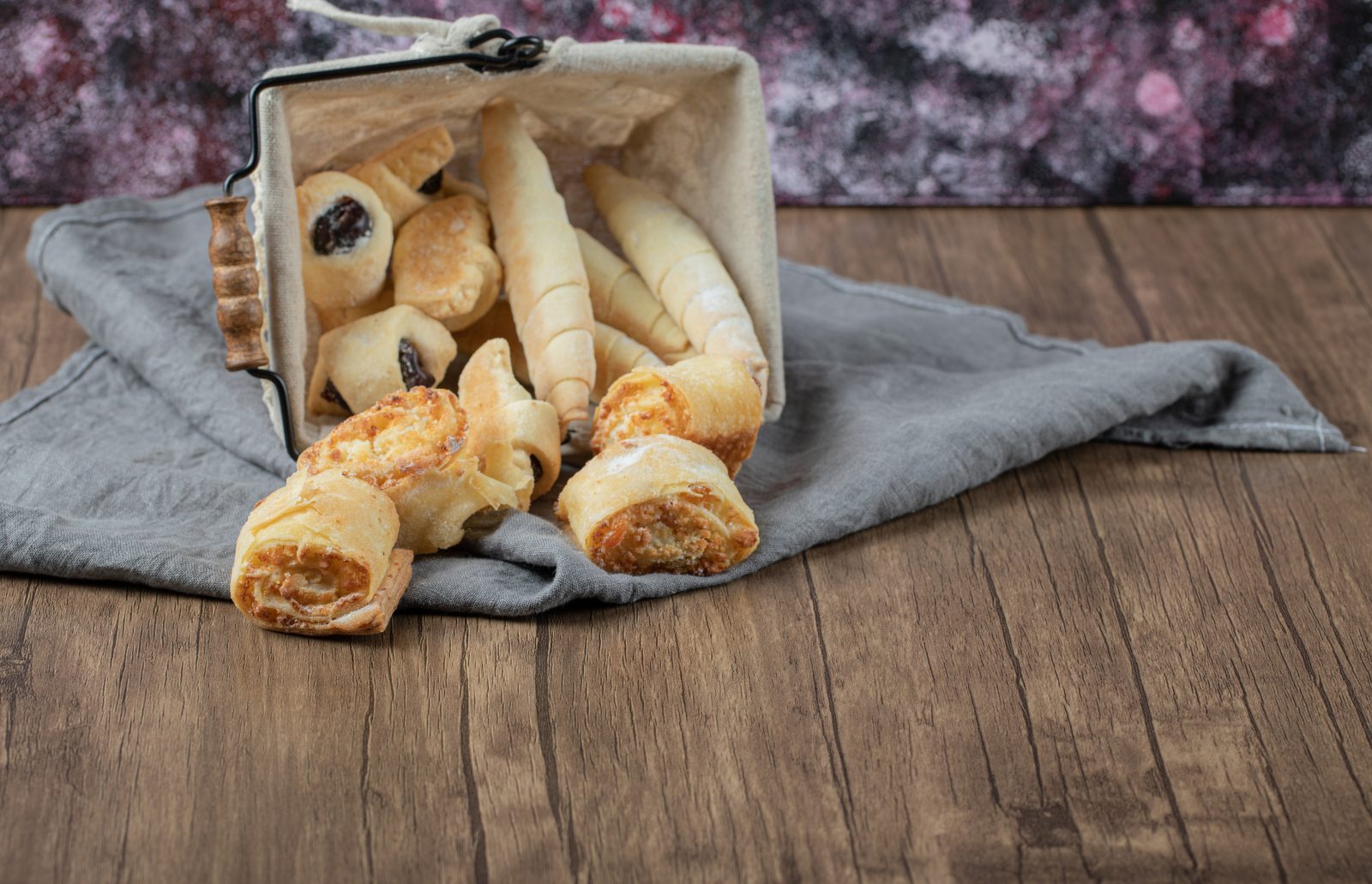
The short version: the croissant and the pain au chocolat are made from the same buttery laminated dough — the croissant is the plain crescent, the pain au chocolat (or chocolatine in the southwest) is a rectangle wrapped around two batons of dark chocolate. Both are viennoiseries, best eaten warm and fresh from a real boulangerie in the morning.
At a glance
| Question | Answer |
|---|---|
| Same dough? | Yes — laminated (layered) butter-and-yeast dough, a viennoiserie |
| Croissant | Plain crescent; ask for “au beurre” for the all-butter one |
| Pain au chocolat | Rectangle with two batons of dark chocolate inside |
| Other name | Chocolatine in south-west France |
| When to eat | Morning, warm, fresh — not kept for later |
Same dough, different shape
Both are viennoiseries — pastries made from a laminated dough of flour, yeast, and a great deal of butter folded in many thin layers, which is what gives the flaky, shattering crust. The croissant is rolled into its crescent and baked plain. The pain au chocolat uses the same dough cut into a rectangle and rolled around two batons of dark chocolate. So the difference is shape and filling, not recipe. A good one is deep golden, audibly crisp outside and soft in the middle — never pale or greasy.
Croissant “au beurre”, and the chocolatine question
At the bakery, look for croissant au beurre (all-butter) — traditionally the straight-shaped one, while the curved crescent could once mean margarine, though most good bakeries now use butter throughout. In south-west France the pain au chocolat is called a chocolatine, a difference locals defend fiercely. Other cousins in the case: the pain aux raisins (spiral with custard and raisins) and the almond croissant (croissant aux amandes), often made from day-old croissants soaked and refilled.
How to eat them like a Parisian
Buy from a proper boulangerie in the morning, when they’re fresh from the oven, and eat them the same day — viennoiseries don’t keep. Parisians take them with a coffee, sometimes torn and dipped. If you want to see who does it best, our boulangerie croissant taste test is a fun read — and you can learn to laminate the dough yourself in a Paris croissant or pastry class. For the rest of the city’s food, see what to eat in Paris.
Frequently asked questions
What is the difference between a croissant and a pain au chocolat?
They use the same buttery laminated dough. The croissant is the plain crescent; the pain au chocolat is a rectangle rolled around two batons of dark chocolate. The difference is shape and filling, not the recipe.
Why is it called chocolatine?
In south-west France (around Toulouse and Bordeaux) the pain au chocolat is traditionally called a chocolatine. It’s the same pastry — just a regional name, and a point of local pride.
What does “croissant au beurre” mean?
An all-butter croissant. Historically the straight-shaped croissant signalled butter and the curved one margarine, though most quality bakeries now make everything with butter.
Taste Paris pastry
Learn to make it in a Paris pastry class, taste your way round on a food tour, or plan from the Paris hub.