Currywurst Explained: Berlin’s Iconic Snack
Currywurst explained: Berlin's iconic street snack of sliced pork sausage in curried-ketchup sauce, invented in 1949 - what it is, where it came from, how to order it (mit or ohne Darm), and where to eat it in Berlin.
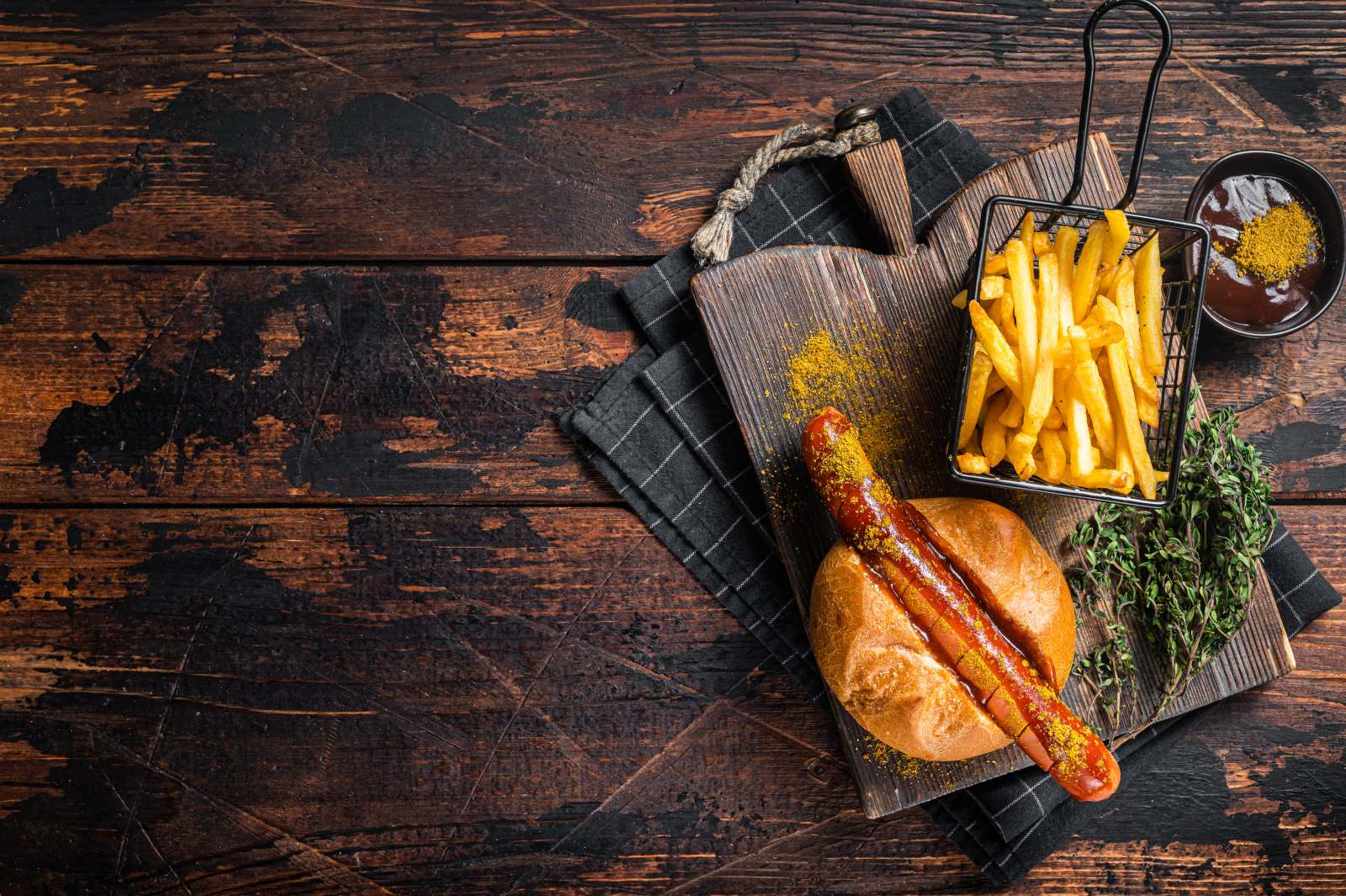
The short version: currywurst is Berlin’s iconic street snack – a pork sausage, grilled or fried, sliced up and doused in a warm curried-ketchup sauce, dusted with more curry powder, and served with a bread roll or chips and a little wooden fork. Invented in 1949, it’s sold from kiosks across the city and has its own devoted following.
Taste it in Berlin
Want to eat your way through Berlin with a local?
Our top pick is the Berlin Downtown Food Tour with 8 Local Tastings: a 3-hour tasting walk through central Berlin, rated 4.9 from 400 reviews on GetYourGuide.
At a glance
| Element | Detail |
|---|---|
| The sausage | Pork Bratwurst, usually skinless in Berlin (mit or ohne Darm) |
| The sauce | Tomato-ketchup base spiced with curry powder |
| Served with | A bread roll (Brötchen) or chips (Pommes) |
| Where | From an Imbiss (kiosk) – every Berliner has a favourite |
Where it came from
The story goes that in 1949, in bombed-out West Berlin, a stallholder named Herta Heuwer got hold of ketchup and curry powder from British soldiers and combined them over grilled sausage. The currywurst was born, and it became the fuel of postwar Berlin – a cheap, hot, satisfying snack that suited a working city. It’s so woven into local identity that Berlin even had a Currywurst Museum.
How to order it, and the variations
At the Imbiss, decide mit or ohne Darm – with skin (a snappier bite) or without (the softer, classic Berlin style) – and whether you want a Brötchen or Pommes (chips) on the side. The sausage comes sliced, sauced and dusted with extra curry powder, eaten standing up with a little fork. Ruhr-region cities do their own versions, but Berlin claims the soul of it. Try it on a Berlin street-food tour, and see the rest in what to eat in Berlin.
Eat your way through the city on one of the Berlin food tours.
Frequently asked questions
What is currywurst?
A Berlin street snack of grilled or fried pork sausage, sliced and covered in a curried-ketchup sauce and curry powder, served with a bread roll or chips.
Where was currywurst invented?
In Berlin in 1949, credited to Herta Heuwer, who combined ketchup and curry powder over sausage. It became the classic snack of postwar Berlin.
What does “mit or ohne Darm” mean?
“With or without skin” – mit Darm has a natural casing for a snappier bite, ohne Darm is skinless, the softer style typical of Berlin.
Taste it in Berlin
Find the best kiosks on a Berlin street-food tour, read what to eat in Berlin, or plan from the Germany hub.