Mosel vs Rhine: Two Kinds of German Riesling
How the Mosel and the Rhine make different German Riesling - the Mosel light, low-alcohol and delicate on slate, the Rheingau fuller and often drier - plus how to read the sweetness on the label.
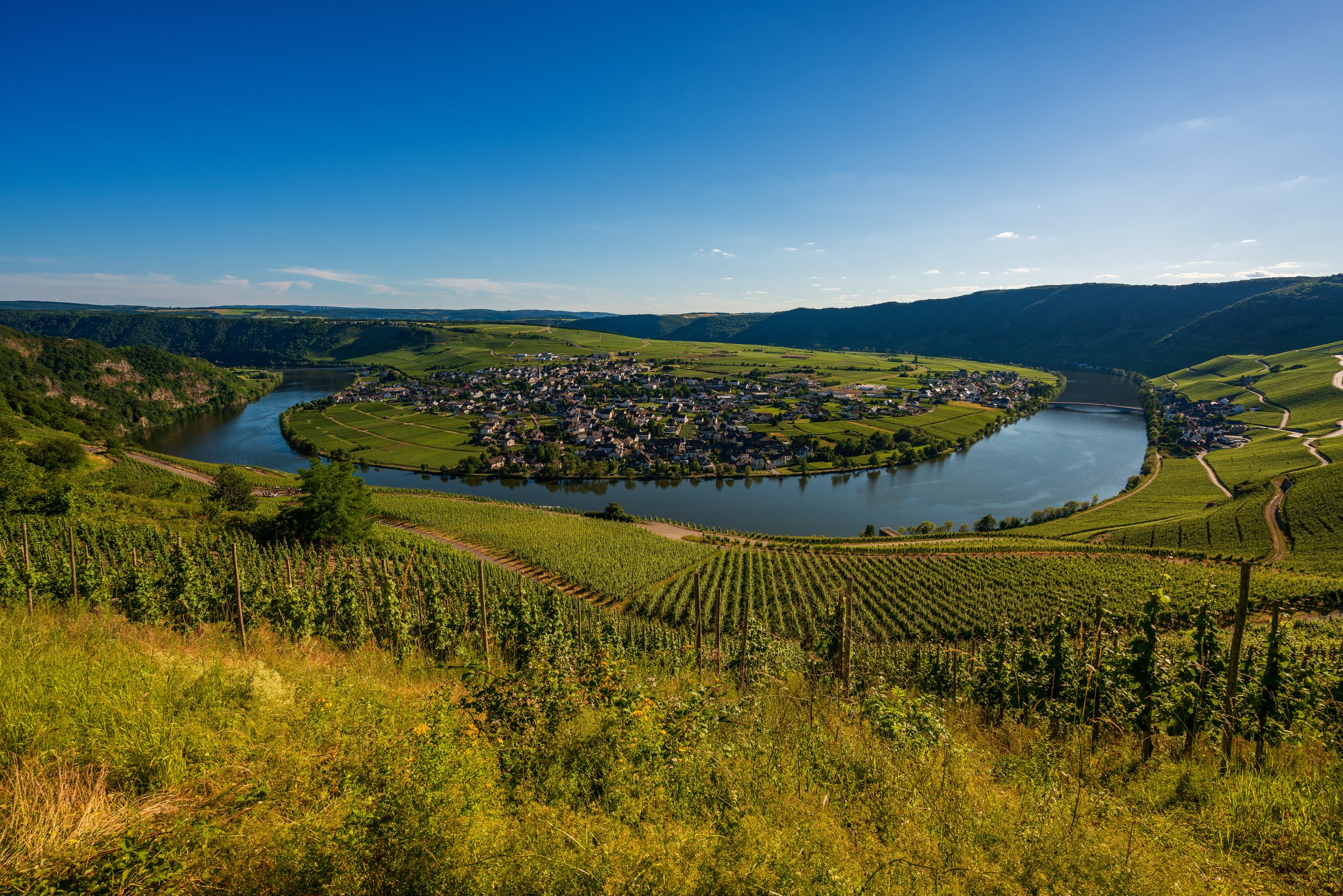
The short version: both make German Riesling, but the Mosel’s steep blue-slate slopes give light, low-alcohol, often off-dry wines of great delicacy, while the warmer Rheingau on the Rhine makes fuller, more powerful, often drier Riesling. One is a feather, the other has more muscle – and both age beautifully. Below is how they differ and how to read the label.
Taste it on the Mosel
Want to taste Mosel Riesling in the vineyards?
Our top pick is the Mosel Covered Wagon Ride Through the Vineyards with Wine Tasting: a 2.5-hour vineyard ride with tastings in Kröv, rated 4.9 from 118 reviews on GetYourGuide.
At a glance
| Mosel | Rhine (Rheingau) | |
|---|---|---|
| Soil | Blue Devonian slate, very steep | Slate, quartzite and loam, south-facing |
| Body & alcohol | Light, low (often 7.5-9%) | Fuller, higher |
| Style | Delicate, floral, often off-dry | Powerful, structured, often dry |
| Flavours | Green apple, citrus, slate, spritz | Peach, apricot, honey, minerality |
| Villages | Bernkastel, Piesport, Cochem | Rüdesheim, Johannisberg, Geisenheim |
The Mosel: delicacy on slate
The Mosel winds between hills so steep the vineyards are worked by hand, on blue Devonian slate that stores heat and gives the wine a smoky minerality. The style is unmistakable: light-bodied, low in alcohol – often just 8% or so – floral and green-appley, with a bright, sometimes faintly spritzy acidity and, in the classic Kabinett and Spätlese styles, a touch of sweetness held in perfect balance. These are among the most delicate fine wines in the world, and they age for decades.
The Rhine: power and structure
On the Rhine, above all the Rheingau around Rüdesheim, the south-facing slopes ripen Riesling to more weight and power. The wines are fuller, more structured and more often made dry (trocken), with peach and apricot fruit over a firm mineral base – this is where late-harvest “Spätlese” picking was discovered, at Schloss Johannisberg. If Mosel Riesling is a watercolour, Rheingau Riesling is an oil painting.
How to read the sweetness
German labels tell you the ripeness at harvest – the Prädikat ladder of Kabinett, Spätlese, Auslese and, for sweet wines, Beerenauslese, Trockenbeerenauslese and Eiswein – but ripeness is not the same as sweetness. For dryness, look for trocken (dry), halbtrocken or feinherb (off-dry); anything without those words in the classic Prädikat styles is likely to have some sweetness, balanced by acidity. A dry Riesling from either region is now easy to find.
For German Pinot Noir, see Baden and Black Forest wine tours.
Frequently asked questions
Is Mosel or Rhine Riesling sweeter?
Mosel Riesling is more often made in a lightly sweet, low-alcohol style, though both regions make dry wines. Look for “trocken” on the label if you want it dry.
Which has more alcohol?
The Rhine, generally. Mosel Riesling is famously low in alcohol – often around 8% in the off-dry styles – while Rheingau wines are fuller and higher.
Where can I taste them?
On our Mosel wine tours around Bernkastel and Cochem, and Rhine Valley wine tours with a castle river cruise from Frankfurt.
Where to taste German Riesling
Compare the two on our Mosel and Rhine Valley wine tours, or plan the wider trip from the Germany hub.