Marsala Wine Explained: Styles, History and the Salt Pans
Marsala wine explained: Sicily's fortified wine from gold to ruby and dry to sweet, the English merchants who created it, how to read a label (Fine to Vergine), and visiting the cellars and Trapani salt pans.
The short version: Marsala is Sicily’s great fortified wine, invented by English merchants in the 1770s, made dry to sweet and gold to ruby, aged by the soleras method – and the trip to taste it comes with the shimmering salt pans and windmills of the Trapani coast. Here is what it is and how to visit.
At a glance
| Term | What it means |
|---|---|
| Oro / Ambra / Rubino | Gold, amber and ruby – the colour styles |
| Secco / Semisecco / Dolce | Dry, off-dry and sweet |
| Fine / Superiore / Vergine | Ageing tiers, from 1 year to 10+ (Vergine/Soleras) |
| Grapes | Grillo, Catarratto, Inzolia (gold/amber); Nero d’Avola, Perricone (ruby) |
How Marsala came to be
In 1773 the English merchant John Woodhouse, sheltering in the port of Marsala, tasted the local wine aged in barrel (the perpetuum, a soleras-like topping-up system) and fortified it with spirit to survive the voyage home – and a rival to Port and Madeira was born. Ingham and Whitaker followed, and Marsala supplied the Royal Navy and Europe. Its reputation later suffered from sweet cooking versions, but serious dry Vergine and aged Marsala are among Italy’s great fortified wines.
Reading a label
Marsala is classified three ways at once: by colour (oro gold and ambra amber from white grapes, rubino ruby from red); by sweetness (secco dry, semisecco, dolce sweet); and by ageing (Fine one year, Superiore two, Superiore Riserva four, and the unfortified-style Vergine/Soleras five, or ten for Stravecchio/Riserva). The white grapes are Grillo, Catarratto and Inzolia; taste a dry Vergine as an aperitivo and a Dolce with cannoli or blue cheese. West Sicily also makes fine dry table wines from Grillo and Nero d’Avola.
The salt pans and how to visit
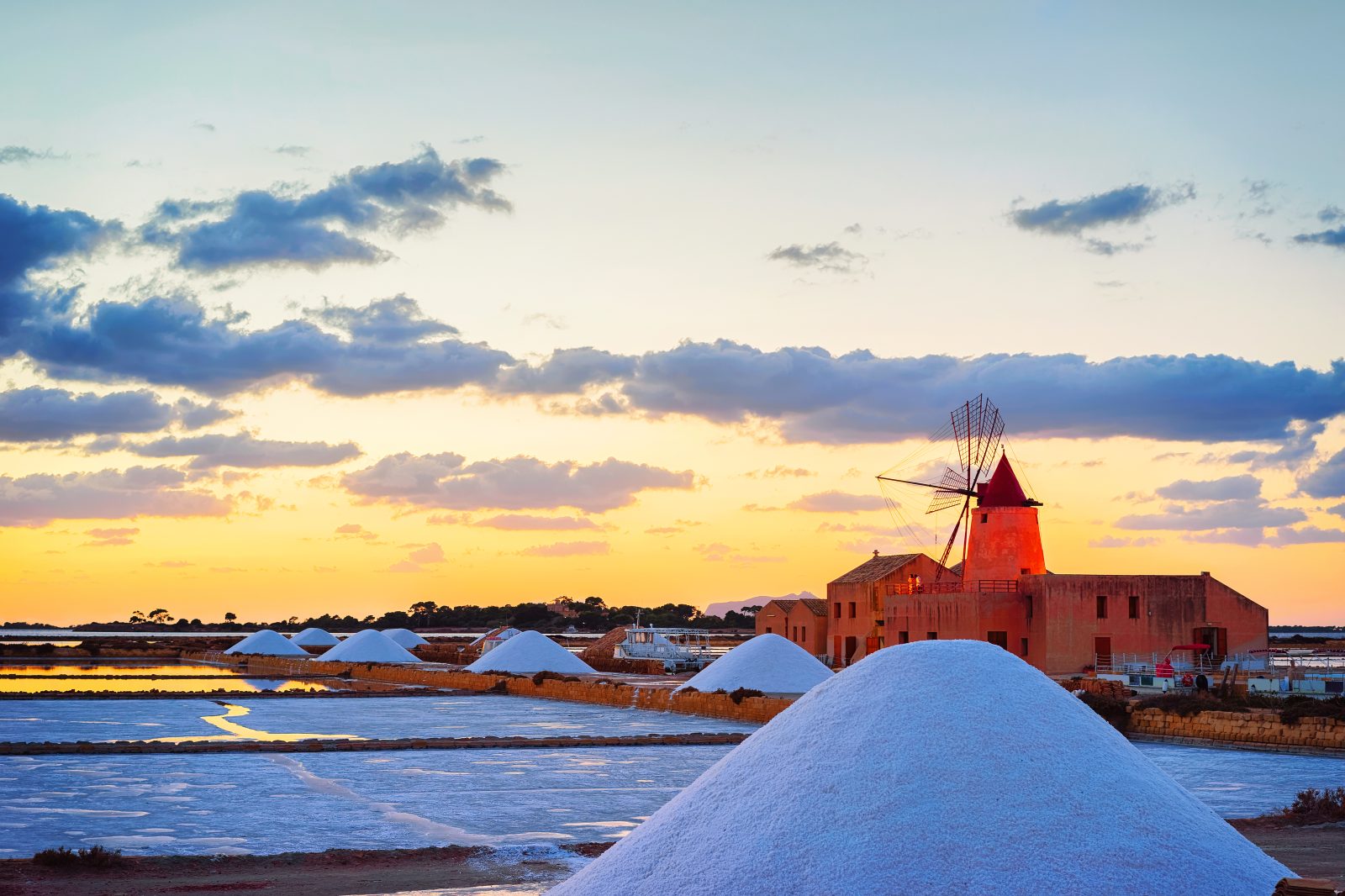
The Marsala trip is as scenic as it is liquid: between Marsala and Trapani lie the salt pans (saline), a chessboard of shallow pools, old windmills and white salt mountains, glowing pink at sunset, with the Phoenician island of Mozia (Motya), once owned by the Whitaker wine family, just offshore. Tour the Marsala cellars for a tasting flight, then the salt road; couscous di pesce, the Trapani speciality, is lunch. See our Marsala wine & Trapani salt pans page, and for Sicily’s other great wine, Etna explained.
Frequently asked questions
What kind of wine is Marsala?
A fortified wine from western Sicily, made dry to sweet and gold to ruby, aged by a soleras-style system – created by English merchants in the 1770s as a rival to Port and Madeira.
Is Marsala only for cooking?
No; that reputation comes from cheap sweet versions. Serious dry Vergine and aged Marsala are fine sipping wines – dry as an aperitivo, sweet with dessert.
What should I pair with Marsala?
Dry Vergine with almonds, olives or hard cheese as an aperitivo; sweet Dolce with cannoli, cassata or blue cheese; and it makes the classic zabaglione.
Can I visit the salt pans with the wine?
Yes; the Marsala-Trapani salt pans, windmills and Mozia island sit right by the cellars, and tours combine a tasting with the salt road. See our Marsala & Trapani page.
Taste western Sicily
Plan a tasting via our Marsala wine & salt pans page, and see the island on the Sicily hub.
Recommended experiences to book
More guides
- Sicily Food & Wine Itinerary: A Week of Eating Around the Island
- 5 Days in East Sicily for Food & Wine: Catania, Taormina, Syracuse & Etna
- What to Eat in Palermo: Local Dishes, Where Locals Eat & the Best Street Food Tours
- Sicily Cooking Classes: Arancini, Pasta alla Norma and Cannoli
- Etna Wine Tours: Volcano Wineries from Taormina & Catania