Sicily Food & Wine Itinerary: A Week of Eating Around the Island
A loose, food-first week around Sicily: Palermo street food, Catania and Etna wine in the east, Baroque Ortigia and Noto, and the Marsala wine and salt pans of the west, with where to base and when to go.
The short version: a week is the sweet spot for eating around Sicily – start in Palermo for street food and markets, cross to the east for Catania’s fish market and Etna’s volcanic wine, base a night or two in Taormina, eat your way through Baroque Ortigia and Noto, and loop back through Marsala’s fortified wine and the salt pans. Below is a loose, food-first shape for the trip, not a fixed schedule.
A note on how to use this: these are suggestions and options, not a minute-by-minute plan. Opening times, ferry and train timetables, market days, tour availability and prices change through the week and the year, so treat the days as a flexible outline and confirm anything time-sensitive directly with the operator or venue before you go.
At a glance
| Days | Base | Eat & drink |
|---|---|---|
| 1-2 | Palermo | Street food markets (Ballarò, Vucciria), arancine, sfincione, cannoli |
| 3 | Catania | La Pescheria fish market, pasta alla Norma, granita and brioche |
| 4 | Etna / Taormina | Volcanic Etna wine, a cooking class with a view |
| 5 | Syracuse (Ortigia) & Noto | Seafood, the Ortigia market, Modica chocolate, granita |
| 6-7 | West: Marsala & Trapani | Marsala fortified wine, the salt pans, couscous di pesce |
Days 1-2: Palermo, the street-food capital
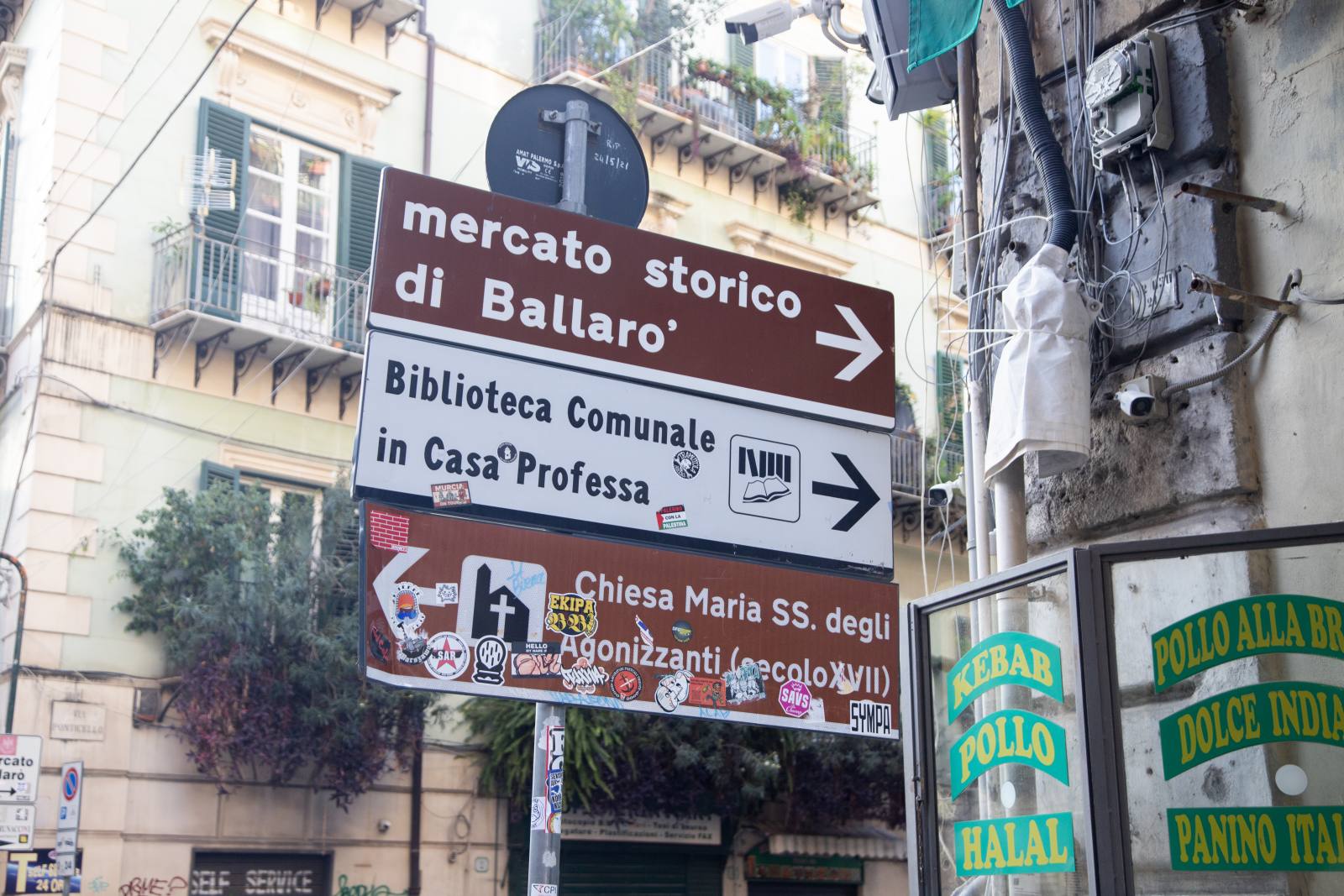
Start where Sicily eats loudest. Palermo’s markets – Ballarò, Vucciria and Il Capo – are the point of the city, roaring with fried panelle and crocchè, sfincione (the thick Palermo focaccia-pizza), arancine and, for the brave, pane ca’ meusa, the spleen sandwich. A Palermo street food tour walks you into the good stalls and explains what you’re eating; our Palermo street food glossary and what to eat in Palermo cover the rest. Give the second day to a Palermo cooking class or a day trip to Monreale and the coast, and finish with cannoli and cassata.
Days 3-4: Catania, Etna and Taormina
Cross to the east (the A19 autostrada, about two and a half hours). Catania‘s La Pescheria fish market is a spectacle, and the city’s dish is pasta alla Norma, with fried aubergine and salted ricotta; breakfast is granita with a brioche col tuppo. See what to eat in Catania. Then up the volcano: Etna‘s vineyards make some of Italy’s most exciting wine from Nerello Mascalese and Carricante – read Etna wine explained and book an Etna wine tour. Base in pretty Taormina and take a Taormina cooking class with a sea-and-volcano view.
Day 5: Syracuse, Ortigia and the Baroque south-east
Head south to Syracuse and the island of Ortigia, whose morning market is one of Sicily’s best for seafood, cheese and produce; a Syracuse food tour ties it together. Inland lie the honey-coloured Baroque towns of the Val di Noto – Noto, Ragusa and Modica, home of the grainy, cold-worked Modica chocolate made the old Aztec way. Granita, almonds and chocolate are the sweet thread through this corner.
Days 6-7: the west – Marsala, Trapani and the salt pans
Loop west for the finale: Marsala, whose fortified wine once supplied Europe – read Marsala wine explained – and the shimmering salt pans between Marsala and Trapani, with their windmills and the Phoenician island of Mozia. Trapani and nearby San Vito lo Capo are couscous country, a reminder of how close Africa is. From here it’s an easy run back to Palermo airport.
Where to base yourself
Two or three bases beat one: Palermo for the west and the street food, Taormina or Catania for the east and Etna, and a night in Ortigia for the south-east. A car is essential for the wine country, Etna and the salt pans, though the Palermo-Catania and coastal towns are reachable by train and bus. Plan the whole trip from our Sicily food & wine hub.
Visit the volcano wineries: Etna wine tours from Taormina and Catania.
Frequently asked questions
How many days do you need in Sicily for food and wine?
Five is enough for Palermo, the east and Etna; a week lets you add the Baroque south-east and the western wine country and salt pans without rushing. Two or three bases work better than one.
What is the best food region in Sicily?
Palermo for street food, Catania and the east for seafood and pasta alla Norma, Etna for wine, and the west (Marsala, Trapani) for fortified wine and couscous. Each is distinct – the joy is the contrast.
Do you need a car in Sicily?
For Etna, the wineries and the salt pans, yes. Palermo, Catania, Taormina and Syracuse are linked by train and bus, but the countryside needs a car.
When is the best time to go?
May-June and September-October: warm, not fierce, with the grape harvest in September-October. July and August are very hot.
Plan your Sicily food trip
Start with a Palermo street food tour, an Etna wine tour or a Taormina cooking class, and see everything on the Sicily hub.
Recommended experiences to book
More guides
- Marsala Wine Explained: Styles, History and the Salt Pans
- 5 Days in East Sicily for Food & Wine: Catania, Taormina, Syracuse & Etna
- Etna Wine Tours: Volcano Wineries from Taormina & Catania
- Palermo Street Food Glossary: Arancina, Panelle, Sfincione, Meusa and Where to Eat Them
- Sicily Cooking Classes: Arancini, Pasta alla Norma and Cannoli