What to Eat in Palermo: Local Dishes, Where Locals Eat & the Best Street Food Tours
What to eat in Palermo, from arancine, panelle and sfincione to the pane ca' meusa spleen sandwich, plus cannoli and cassata and the Ballarò, Vucciria and Capo markets where the city eats.
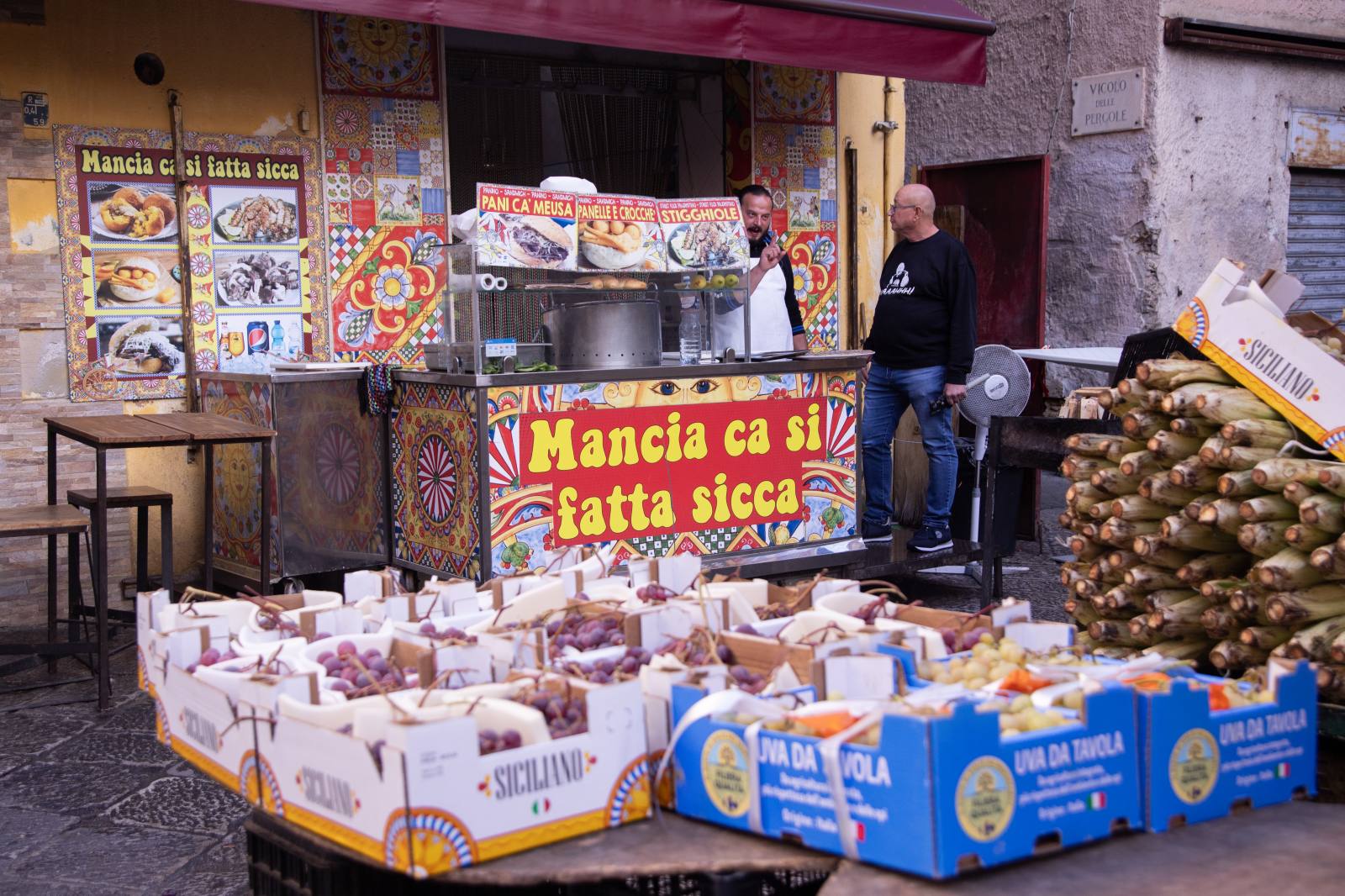
The short version: Palermo is Europe’s great street-food city. Eat an arancina (fried rice ball), panelle and crocchè (chickpea fritters and potato croquettes), a slab of sfincione (Palermo’s thick, oniony pizza), pani ca’ meusa (the spleen sandwich) and a cannolo, and in summer have granita with brioche for breakfast. For street food go to Porta Carbone by the old port or Nino u’ Ballerino; for arancine, Ke Palle on Via Maqueda; for a sit-down Sicilian lunch, Buatta Cucina Popolana. Drink Nero d’Avola and finish with Marsala. And if you only have a day or two, a guided street-food tour is the shortcut through the markets of Ballarò, the Capo and the Vucciria. Below: what to eat, exactly where to eat it, what to drink, and the food experiences worth booking.
Book a Palermo street food tour
Short on time? Let a local walk you to the right places.
Our top pick is the Street Food and History Walking Tour: 3 hours, rated 4.8 from 1,716 reviews on GetYourGuide.
What to eat in Palermo, and where to eat it
| Dish | What it is | Where to eat it in Palermo |
|---|---|---|
| Arancina | A fried ball of saffron rice, classically filled with meat ragù and peas (al burro: ham and cheese). In Palermo it is feminine: arancina, plural arancine | Ke Palle; Sfrigola |
| Panelle and crocchè | Thin fritters of chickpea flour and potato croquettes, often eaten together in a sesame bun | Nino u’ Ballerino; Porta Carbone; Ke Palle |
| Pani ca’ meusa | A soft bun filled with veal spleen and lung cooked in lard: schietta (plain, with lemon) or maritata (“married”, with caciocavallo or ricotta) | Antica Focacceria San Francesco; Porta Carbone; Nino u’ Ballerino |
| Sfincione | Palermo’s thick, spongy pizza topped with tomato, onion, anchovy, breadcrumbs and caciocavallo | Porta Carbone |
| Stigghiola | Lamb or kid intestines wrapped around spring onion and grilled over charcoal in the street | Porta Carbone; the stalls of the Vucciria at night |
| Polpo and quarume | Boiled octopus, and quarume (boiled veal offal) with salt and lemon, from the market stalls | Ballarò market |
| Cannolo | A fried pastry tube filled with sweet sheep’s ricotta | Pasticceria Cappello; Ke Palle |
| Monastery sweets | Ricotta cakes, almond biscuits and filled pastries made to convent recipes | I Segreti del Chiostro |
| Sicilian home cooking | Pasta, fish and vegetable dishes from old family recipes | Buatta Cucina Popolana; Bisso Bistrot |
Where to eat in Palermo
In Palermo the best food is often the cheapest: the fryers, grills and counters of the old markets, where a full lunch of street food costs a few euros. The historic centre is divided into four old quarters by the crossing of Via Maqueda and Corso Vittorio Emanuele at the Quattro Canti, and each has its own market. Eat street food at lunchtime, when the stalls are busiest, and keep the evening for a trattoria or a wine bar. The newer city north of the centre, around Teatro Politeama and Via Libertà, is where Palermitans go for pastries, aperitivo and shopping.
Ballarò and the Albergheria
The Albergheria, the quarter behind the Cathedral and the Norman Palace, is home to Ballarò, the big market that runs from Piazza Casa Professa towards Corso Tukory. Between the fruit, vegetables, spices, meat and fish, the cooked-food stalls sell panelle, crocchè, boiled octopus, quarume, baked onions and pani ca’ meusa. At the edge of the quarter, Pasticceria Cappello on Via Colonna Rotta is the pastry shop for ricotta cannoli and its famous settestrati, a seven-layer chocolate and hazelnut cake. For arancine, Sfrigola has a shop on Via Maqueda and another on Corso Calatafimi, just outside Porta Nuova, with classic, baked and special versions.
Via Maqueda and the Kalsa
The Kalsa, the old Arab quarter between the Quattro Canti and the sea, has some of the city’s best tables. Antica Focacceria San Francesco, by the church of San Francesco d’Assisi, was founded in 1834 and serves pani ca’ meusa both ways: schietta or maritata. On Corso Vittorio Emanuele, Buatta Cucina Popolana cooks traditional Sicilian home food from old recipes. For a creative dinner, Osteria dei Vespri, on a small square in the Kalsa, serves modern Sicilian cooking by chef Alberto Rizzo with a wine list of more than 600 labels. On Via Maqueda, Ke Palle is the arancine specialist, from classic meat to fish, vegetarian and sweet versions, plus panelle, crocchè and cannoli, and Bisso Bistrot, at the Quattro Canti, cooks popular traditional recipes with market produce, open from 9:00 to midnight. For sweets, the nuns’ recipes live on at I Segreti del Chiostro, the pastry shop of the Santa Caterina monastery.
The Vucciria and La Cala
The Vucciria, between Via Roma, Piazza Caracciolo and the old port of La Cala, still has a few fish and vegetable stalls by day, but it now comes alive from late afternoon into the night, with cheap bars and street-food grills selling panelle, crocchè, pani ca’ meusa and stigghiola. Down at the port, Porta Carbone has served street food since 1943: pane ca’ meusa, panelle, cazzilli (the Palermo name for crocchè), sfincione and stigghiola, prepared daily; a second shop opened on Via Maqueda in 2024. For the special night, Gagini on Via Cassari is the fine-dining choice in the Vucciria, with a Sicilian-focused wine list.
The Capo and beyond
The Capo, the market behind the Teatro Massimo, is the most local of the three: fruit, vegetables, fish and meat for the people who live in the surrounding lanes. West of the old centre, Nino u’ Ballerino on Corso Finocchiaro Aprile is a long-running street-food counter for the panino con la milza (the spleen sandwich), panino con panelle, crocchè, arancine and baked anelletti, the ring-shaped pasta baked with ragù.
Politeama and Libertà
North of the centre, the 19th-century city around Teatro Politeama is where Palermo has its morning pastry and evening glass. Enoteca Picone, open since 1946, is the city’s historic wine shop, with a by-the-glass counter at the entrance and a complete Sicilian selection among more than 7,000 labels. During its 2026 renovation it uses a temporary entrance at Via Rosario Riolo 6, around the corner. Pasticceria Cappello has a second shop here, on Via Nicolò Garzilli.
Mondello
Palermo’s beach, a sandy bay between Monte Pellegrino and Monte Gallo, is a short bus or taxi ride north of the centre, and Palermitans go there to swim and eat fish. In the old fishing village, Bye Bye Blues serves a Sicilian tasting menu in the evenings from Tuesday, with Sunday lunch, and is closed on Mondays.
Quick picks
- Classic Sicilian meal: Buatta Cucina Popolana on Corso Vittorio Emanuele.
- Cheap and fast: pani ca’ meusa at Porta Carbone or Antica Focacceria San Francesco, arancine at Ke Palle.
- Special night: Gagini in the Vucciria, Osteria dei Vespri in the Kalsa, or Bye Bye Blues in Mondello.
- Best for the signature dish: Ke Palle or Sfrigola for arancine, Nino u’ Ballerino for the spleen sandwich, Pasticceria Cappello for cannoli.
Names link to Google Maps for directions. We checked these places in October 2026. Opening days change, especially out of season, so check before you go.
The markets
Palermo’s three historic markets are the reason to come. Ballarò, in the Albergheria, is the one to see first: produce, spices, meat and fish, with the stallholders calling out their prices, and cooked street food between the stalls. The Capo, behind the Teatro Massimo, is the neighbourhood market, quieter and very local. The Vucciria, near the port, is smaller by day and becomes an open-air bar and grill at night. Go to Ballarò and the Capo in the morning, when the stalls are full. Buy olives, capers, sun-dried tomatoes, wild oregano and pistachios to take home, and taste whatever is coming off the fryers.
What to drink in Palermo
Sicily is one of Italy’s biggest wine islands. The red to order is Nero d’Avola, the island’s signature grape: deep, dark-fruited and generous. For whites, look for Grillo and Catarratto, the grapes of western Sicily. Marsala, the fortified wine from the town of the same name on the west coast, is the one to try with dessert or cheese, and it is used in the kitchen too. For a glass in the city, Enoteca Picone is the address, with its by-the-glass counter and full Sicilian range; Osteria dei Vespri and Gagini have serious Sicilian lists. In summer, Palermitans start the day with granita, crushed ice flavoured with lemon, almond, coffee or mulberry, eaten with a warm brioche from the corner bar, and the evening with an aperitivo in the Vucciria.
Food experiences to book in Palermo
Palermo’s street food is everywhere, but the best stalls are unmarked and the dishes have names you will not find in a dictionary. That is why a street-food tour pays off on a short visit: a local guide takes you through Ballarò, the Capo or the Vucciria in a few hours, orders the panelle, pani ca’ meusa and arancine for you, and explains what you are eating. A cooking class is the other good choice, for arancine or pasta alla Norma to make at home. These are the best-rated options on GetYourGuide.
| Experience | Length | Rating (reviews) | Best for | Book |
|---|---|---|---|---|
| Street Food and History Walking Tour | 3 hours | 4.8 (1,716) | A first visit | Check availability |
| Street Food Tour of the Market and City Centre | 2.5 hours | 4.8 (1,085) | The markets | Check availability |
| Authentic Street Food Tour | 3 hours | 4.9 (601) | Small groups | Check availability |
| Small-Group Night Street Food Tour | 3 hours | 4.8 (721) | An evening out | Check availability |
Our pick: the Street Food and History Walking Tour, rated 4.8 (1,716) on GetYourGuide.
Ratings as shown on GetYourGuide in October 2026. Check the listing for live prices and availability.
Frequently asked questions
What is the one dish to eat in Palermo?
The arancina, the fried rice ball, is the city’s symbol: try it at Ke Palle or Sfrigola on Via Maqueda. If you are brave, the pani ca’ meusa at Antica Focacceria San Francesco or Porta Carbone is the most Palermitan thing you can eat.
Arancina or arancino?
In Palermo it is arancina, feminine, and usually round; in eastern Sicily it is arancino, masculine, and often cone-shaped. Say arancina in Palermo.
Where do locals eat in Palermo?
At the market stalls of Ballarò and the Capo at lunchtime, at street-food counters like Nino u’ Ballerino and Porta Carbone, and at trattorias such as Buatta Cucina Popolana in the old centre.
Where can I eat cheaply in Palermo?
Everywhere street food is sold: an arancina, a panelle bun or a pani ca’ meusa costs a few euros at Ke Palle, Sfrigola, Porta Carbone or the stalls of Ballarò and the Vucciria.
What should I eat for breakfast in Palermo?
In summer, granita with a warm brioche, the Sicilian way to start a hot day; the classic flavours are lemon, almond and coffee. The rest of the year, a coffee and a pastry from the counter, such as a cannolo or a slice of cake at Pasticceria Cappello.
Which Sicilian sweets should I try?
A cannolo with sweet sheep’s ricotta, a slice of settestrati at Pasticceria Cappello, and the convent sweets of I Segreti del Chiostro, from the Santa Caterina monastery: ricotta cakes, almond biscuits and filled pastries. Ke Palle also sells cannoli and sweet arancine.
Do I need to book restaurants in Palermo?
For Gagini, Osteria dei Vespri and Bye Bye Blues, yes. Street-food counters and market stalls take no bookings.
Is a Palermo street-food tour worth it?
Yes, especially if you are wary of spleen sandwiches and offal: a guide shows you which stalls to trust and what to order, and you taste ten things in a few hours. Compare them above, or read our Palermo street food glossary first.
Plan your Palermo food trip
Palermo street food tours · Palermo cooking classes · Palermo street food glossary
Recommended experiences to book
More guides
- Cannoli and Sicilian Sweets Explained
- Sicily Cooking Classes: Arancini, Pasta alla Norma and Cannoli
- Etna Wine Explained: Nerello, Carricante, the Contrade, and Taormina or Catania for the Tour
- What to Eat in Catania: Pasta alla Norma, Granita and Etna
- Etna Wine Tours: Volcano Wineries from Taormina & Catania