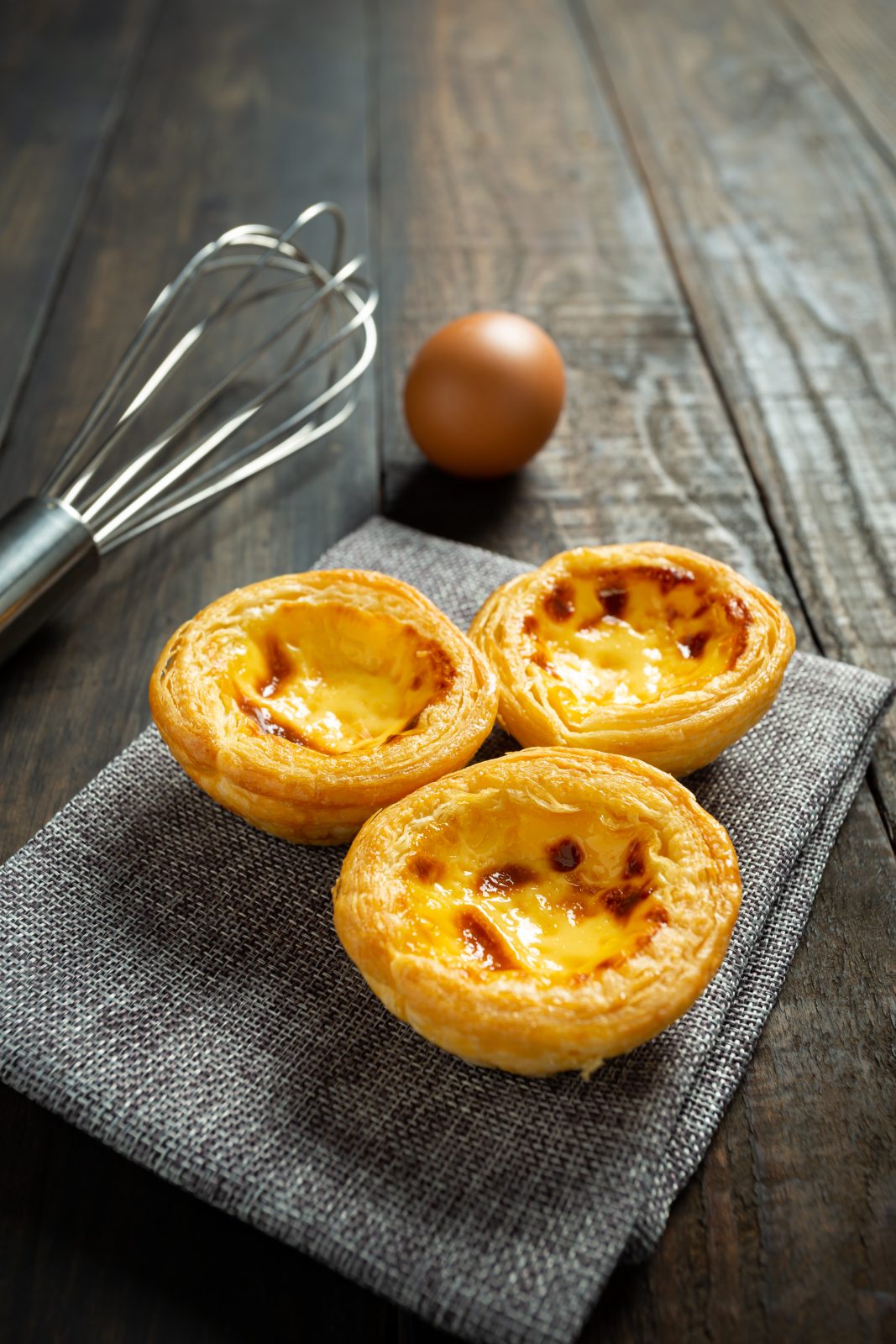
The short version: the pastel de nata is Portugal’s custard tart — a cup of shatteringly crisp, laminated puff pastry filled with a rich egg-yolk custard, baked blisteringly hot so the top caramelises into dark spots. Born in Lisbon’s Belém monastery, it’s eaten warm, dusted with cinnamon, with an espresso. Here’s how it works.
At a glance
| Question | Answer |
|---|---|
| What it is | Puff-pastry cup filled with egg-yolk custard, baked very hot |
| Origin | Jerónimos Monastery, Belém, Lisbon (before 1837) |
| Pastel de Belém | The protected original, made to a secret recipe in Belém |
| How to eat it | Warm, with cinnamon and/or powdered sugar, and a bica (espresso) |
| Nata vs Belém | Pastel de nata is the general name; Pastel de Belém is the trademark |
What a pastel de nata actually is
A pastel de nata is a small tart built from two things done very well: laminated puff pastry, rolled and coiled so it bakes into crisp, buttery layers that form a little cup, and a custard of egg yolks, sugar, milk and a touch of flour, scented with lemon and cinnamon. The trick is the very hot oven (traditional ones run above 300°C): the custard sets fast and the top blisters and caramelises into the signature dark, almost burnt spots, while the pastry stays crisp. Eaten warm, the contrast of crackling pastry and molten custard is the whole point.
The Belém origin and the secret recipe
The tart was born at the Jerónimos Monastery in Belém, west Lisbon, where monks used egg yolks for pastries (egg whites went to starching habits and clarifying wine). After the monasteries closed in 1834, the recipe passed to a nearby bakery that became the Fábrica de Pastéis de Belém, which still makes them to a secret recipe and owns the name Pastel de Belém. Everywhere else, and everywhere else in the world, the same tart is a pastel de nata (“nata” meaning cream) — so all pastéis de Belém are pastéis de nata, but only Belém’s carry the trademark.
How to eat it — and make it
Eat them warm from the oven, sprinkled with cinnamon and, if you like, powdered sugar, alongside a bica (Lisbon espresso). They don’t keep, so buy them fresh and few at a time. To go deeper, you can learn to make them: many Lisbon cooking classes run pastel de nata baking workshops where you laminate the dough and torch the custard yourself. For the rest of the city’s food, see what to eat in Lisbon.
Frequently asked questions
What is a pastel de nata made of?
Laminated puff pastry formed into a cup, filled with a custard of egg yolks, sugar, milk and a little flour, scented with lemon and cinnamon, then baked in a very hot oven so the top caramelises.
What is the difference between pastel de nata and pastel de Belém?
They’re the same tart. “Pastel de nata” is the general name; “Pastel de Belém” is the trademarked version made to a secret recipe only at the Fábrica de Pastéis de Belém in Lisbon.
How do you eat a pastel de nata?
Warm, ideally straight from the oven, dusted with cinnamon and sometimes powdered sugar, with an espresso. They’re best fresh and don’t keep well.
Taste and make pastéis de nata
Learn to bake them in a Lisbon cooking class, taste them on a Lisbon food tour, or plan from the Portugal hub.