The short version: Nemea is Greece’s largest red-wine appellation, in the hills of the Peloponnese, and it is built almost entirely on one native grape — Agiorgitiko, or “St George.” It makes soft, dark-fruited reds that range from juicy and easy to deep and age-worthy, and it comes wrapped in ancient history, an hour and a half from Athens. Below is what it tastes like and where to try it.
At a glance
| What | Detail |
|---|---|
| Region | Nemea, Peloponnese — Greece’s biggest red PDO |
| Grape | Agiorgitiko (“St George”) |
| Taste | Plum and cherry, soft tannins, gentle spice |
| Styles | Rosé and light reds to deep, oak-aged bottles |
| Pairs with | Lamb, stews, tomato dishes, hard cheese |
The grape: Agiorgitiko
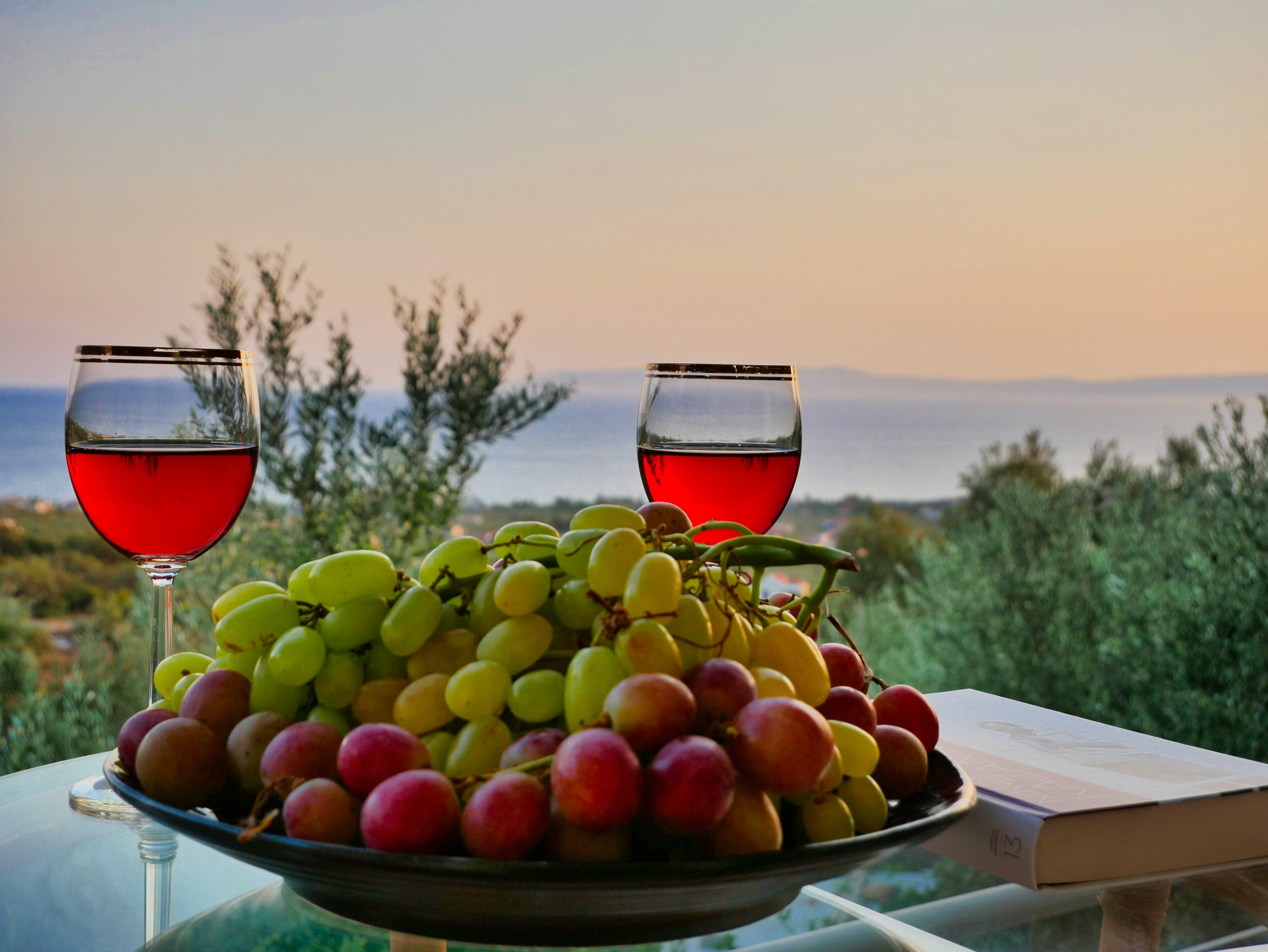
Agiorgitiko — the name means “St George’s grape” — is one of Greece’s noblest native varieties and the sole red grape of the Nemea appellation. It gives a deep-coloured wine of ripe red and black fruit, plum and cherry, with soft, velvety tannins, medium acidity and a lift of sweet spice. That gentleness makes it hugely versatile: growers turn it into fresh rosé, bright everyday reds, and serious barrel-aged wines that repay a few years in the cellar.
Why altitude matters here
Nemea climbs from a valley floor to high slopes around 800 metres, and the wine changes as you go up. Lower, warmer sites give softer, fruitier, earlier-drinking wines; the high vineyards, with cold nights, give the structured, age-worthy bottles. It is one appellation with several characters, which is why a tasting across two wineries tells you more than any single glass. The wine also carries a myth — it is sometimes called the “Blood of Hercules,” after the Nemean lion he slew nearby.
Wine and ancient history together
Because this is the Peloponnese, the vineyards sit beside the ruins: the Temple of Zeus and the ancient stadium of Nemea, where the Panhellenic games were held. Most tours pair the cellars with the archaeological site, so a wine day doubles as a history day. The nearby Mantinia plateau adds a floral white, Moschofilero, for contrast.
Frequently asked questions
What does Nemea wine taste like?
Soft and dark-fruited — plum and cherry with gentle tannins and a little spice — from the native Agiorgitiko grape. It ranges from easy-drinking to deep and age-worthy.
Can I visit Nemea from Athens?
Yes; it is about ninety minutes away, and day trips visit two wineries with lunch, often combined with the ancient site of Nemea. See our Peloponnese wine tours.
What food goes with Agiorgitiko?
Lamb, tomato-based stews and hard cheeses — the everyday food of the Peloponnese. Its soft tannins make it very food-friendly.
Where to taste Nemea wine
Taste Agiorgitiko at the source on our Peloponnese & Nemea wine tours, or start with a tasting in the city on our Athens wine page, and plan the trip from the Greece hub.